-
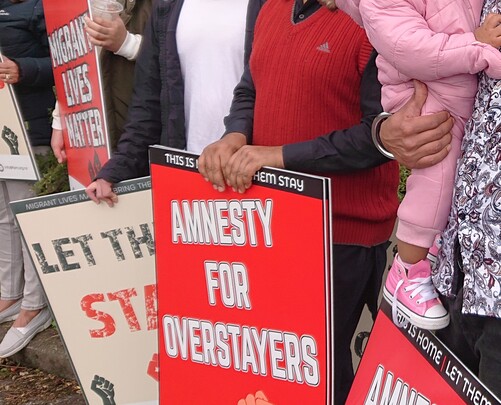 Amnesty for OverstayersEstimates are that Aotearoa has approximately 14,000 people without any visas or legal status. These are migrants, their whānau and tamariki who have been living in fear during some of the worst challenges we have faced as a country. They are victims of our regressive immigration policies, not criminals. Overstayers deserve to lead a life with dignity and respect. They deserve to be safe and deserve to be helped, especially during hard times like the Northland floods and Cyclone Gabrielle. With the current system, overstayers have hesitated to seek medical help such as covid tests and covid vaccination, for the fear of being reported to authorities and subsequently being deported. And now many of them are flood victims afraid of seeking assistance provided by the government. This is potentially a dangerous and unsafe health situation, not just for the victims but for the entire communities surrounding them. Many of our overstayers are children of parents who do not have lawful status. It is harsh and unfair to punish the children by depriving them of access to needed services such as health care providers, education and safety services. Researchers at UNITEC published an excellent report highlighting the plight of overstayers and their families – the stresses are multi-fold and affect their mental well-being. The solution proposed by researchers is also policy change and legal status for the overstayers. Link to the full report: https://www.unitec.ac.nz/sites/default/files/public/documents/Tuvalu%20project%20report%20-FINAL-13.12.2021.pdf An amnesty for all overstayers regardless of their country of origin is the need of the time.While we appreciate that the Prime Minister is going to look at the petition regarding Pacific overstayers, he needs to be inclusive and act sooner than later. We ask the Prime Minister to give overstayers work rights and their children access to public education, allowing them to lead a life of dignity.1,162 of 2,000 SignaturesCreated by Anu Kaloti
 -
.png) Save Auckland CABs!The service provided by Auckland CABs is absolutely essential – something that is even more apparent in times of crisis. With the recent floods and the ongoing challenges of daily life, Auckland CABs are helping people with information and advice and connecting them with the support they need. Last year our dedicated volunteers in Auckland CABs helped more than 160,000 people. Auckland Council is proposing to significantly cut or even remove all funding from CABs in Auckland in its budget for 2023/24. This could result in the complete closure of the CAB service, which has been serving Tāmaki Makaurau for over 50 years. Let Auckland Council know that they should not cut funding to Auckland CABs.22,606 of 25,000 SignaturesCreated by Sacha Green
Save Auckland CABs!The service provided by Auckland CABs is absolutely essential – something that is even more apparent in times of crisis. With the recent floods and the ongoing challenges of daily life, Auckland CABs are helping people with information and advice and connecting them with the support they need. Last year our dedicated volunteers in Auckland CABs helped more than 160,000 people. Auckland Council is proposing to significantly cut or even remove all funding from CABs in Auckland in its budget for 2023/24. This could result in the complete closure of the CAB service, which has been serving Tāmaki Makaurau for over 50 years. Let Auckland Council know that they should not cut funding to Auckland CABs.22,606 of 25,000 SignaturesCreated by Sacha Green -
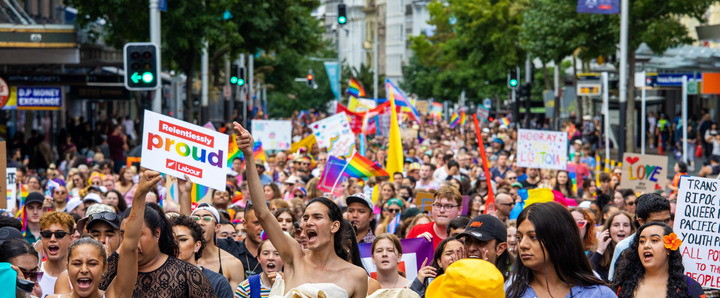 Include the queer community, women and disabled people under hate speech law changesIn 2022, there have been numerous attacks on the queer community. An arsonist burned down the Rainbow Youth drop-in centre in Tauranga. Gloria of Greymouth, a pink queer church, was vandalised with anti-queer and religious symbols. The owner of Woof!, a queer bar in Dunedin, received two anonymous death threats through the bar's social media account and messages from Freedom and Rights Coalition leader and Destiny Church pastor Derek Tait, of Christchurch, including an image of Tait pointing at the bar. Hours after the Labour Party announced that it will exclude the queer community from protection under hate speech laws, a 22-year-old gunman entered Club Q, a queer nightclub in Colorado, and immediately opened fire, killing at least five people and injuring 25 others. In 2017, an Auckland pastor Logan Robertson said he was "not against [gay people] getting married as long as a bullet goes through their head the moment they kiss". That statement will remain legal under the government's changes to hate speech laws. Are we waiting for a mass shooting inspired by homophobia and transphobia to transpire at a New Zealand queer bar before we protect queer people from hate speech that incites violence? How many lives will it take before the government protects us? There is well-documented hatred against queer people to necessitate the protection of queer people under hate speech laws. The government's failure to do so will embolden homophobic and transphobic groups, extremist religious groups, and right-wing groups to incite violence against queer people. The government must protect the queer community, women and disabled people under the hate speech law. https://www.stuff.co.nz/national/crime/129122700/man-admits-antisemitic-and-homophobic-attack-on-west-coasts-pink-church https://www.nzherald.co.nz/nz/destiny-church-pastor-accused-of-intimidation-after-posing-outside-queer-friendly-bar-in-dunedin/SXLGUMQ6Y5LO6SZEOWNW4ZQ3DM/ https://www.stuff.co.nz/bay-of-plenty/300700598/pair-plead-guilty-to-burning-down-rainbow-youth-building https://www.newsroom.co.nz/nzs-hate-speech-laws-explained https://www.stuff.co.nz/national/politics/300743361/hate-speech-reforms-drastically-watered-down https://www.theguardian.com/us-news/2022/nov/20/people-killed-shooting-at-colorado-springs-nightclub10,578 of 15,000 SignaturesCreated by Shaneel Lal
 -
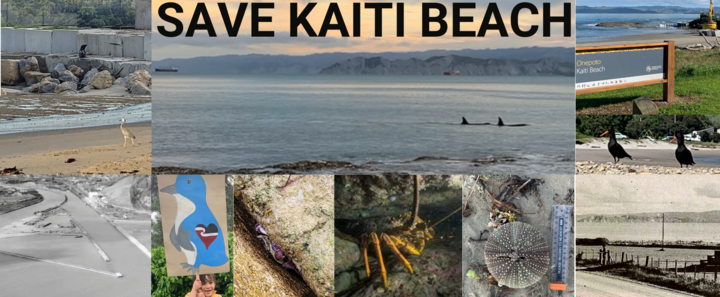 Save Kaiti Beach; PROTECT our History and BiodiversityEastland Port is planning to carry out substantial construction work to expand their port in Tūranga-nui-a-Kiwa Gisborne. This includes further reclamation of reef and ocean space near the river mouth and more dredging with disposal of materials to the off shore disposal ground located within the bay.(1) These proposed works would create further loss of habitat for taonga species, fail to respect significant cultural values and will distort a precious historical site of Aotearoa New Zealand. The species currently occupying this area are Kororā (little blue penguin), Toreā (oystercatcher), Taranui (caspian tern), Matuku Moana (white faced heron), Kāruhiruhi (pied shag), Kawaupaka (little shag), Tākapu (gannet), Karoro (black backed gull), Kōtare (kingfisher), Kekeno (fur seal), Whai (stingray), Kōura (crayfish), Kākahi (fresh water mussel), Pāpaka nui (purple rock crab), Kina (sea urchin), Manaia (seahorse) to name a few. Orca whales also feed from the reef with their young at certain times of the year. Previous construction work by Eastland Port destroyed an estimated 35 to 70 kororā (little blue penguin) nests during the breeding season in 2021. The habitat was located within the rock wall where the port carried out demolition and reclamation.(2) The consent granted to Eastland Port was a Limited notification which didn't allow for Public Submissions. The site of the proposed works is described as nationally and internationally significant to our country. A natural reef formation used by ancestors of Māori as a landing point dating back many centuries ago. The landing entrance later saw an arrival of Europeans. Kaiti Beach represents a significant historical site used by both our Māori and Pākehā ancestors. In the words of Dame Anne Salmond: “The foreshore of the Tūranaganui River is one of the world’s great voyaging sites. It is the landing place of the Horouta canoe, celebrating the achievements of the Polynesian star navigators. It is the place where Captain James Cook and his companions first came ashore in New Zealand, heralding the traditions of European exploration and discovery. It is the site where Tupaia, the Ra’iatean high priest navigator who sailed with Cook, first met Māori, marking the links between local people and their ancestral homelands. It is a meeting place of cultures, of challenges and shootings, as well as friendly exchanges. Here Captain Cook and a local man saluted each other with a hongi on Te Toka-a-Taiau, the first greeting between a Māori and a European. It is a sacred site for all New Zealanders, to be celebrated with pride and treated with dignity."(3) In the words of Sir Derek Lardelli: Te Toka-a-Taiau, the rock of Taiau, Te Pito o Te Ao, is the core of our universe, a Tairawhiti perspective Ko Te Toka-a-Taiau, Te herenga o ngā wai mai te hononga o ngā rua Te Toka-a-Taiau is the spiritual gathering place of our ancestors Ko Te Toka-a-Taiau, Te whakatinanatanga o te whakapapa We are the kaitiaki guardians of this very sacred site and Te Toka-a-Taiau is the physical reminder of our commitment to the land, the people and our environment Ko Te Toka-a-Taiau he mauri tipua Te Toka-a-Taiau is the spiritual essence of our ancestors Ko te Toka-a-Taiau he mauri tawhito Te Toka-a-Taiau is a spiritual essence from ancient times He mauri no te kukunetanga mai i Hawaiki The spiritual essence from the origins of time and the spiritual homeland of Hawaiki Mauritū nei hei ahurewa tapu That stands as a sacred alter Mauritū nei hei tūāhu tapu That stands as the launching pad of our destiny"(3) We believe all people of Aotearoa New Zealand would consider this a significant piece of history and we need to protect the area from further disruption and modification. We ask you to join us in saying “Enough!” to Eastland Port and Gisborne District Council. Join us in calling for the protection of this natural environment, a life source, a habitat of taonga species, a significant piece of history connecting each of us to our identity. We must protect it for future generations so they can connect to their history. This is our chance Aotearoa New Zealand, let's stand together, side by side to give this area the respect and dignity it deserves. Let it be your time in history to help shape this moment and move us all forward in an ethical direction to let the healing begin. Thank you for your time and consideration in signing this petition. This petition will be used as evidence for public support to deny the consent application submitted by Eastland Port. References: 1. https://www.gdc.govt.nz/consents-and-licenses/notified-consents/notified-consents/Eastland-port-limited 2. Recommendations for penguin management for the Waikahua seawall project at Eastland Port (December 2021). Dr. John Cockrem. https://www.gisborneherald.co.nz/frontpage-featured/20211223/seawall-deadly-for-korora/ 3. The Tūranganui River; A Brief History (October 2006). Michael Spedding. Articles: https://www.stuff.co.nz/national/126798579/little-penguins-left-dead-injured-and-homeless-after-seawall-rebuild-in-gisborne https://www.gisborneherald.co.nz/frontpage-featured/20211022/penguin-alert-locals-urged-to-keep-an-eye-out-after-korora-little-blue-pen/ https://www.gisborneherald.co.nz/local-news/20211027/call-hotline-first-regarding-wildlife-concerns-or-findings-department-of-c/ https://www.gisborneherald.co.nz/local-news/20211028/port-stops-work-pending-search-for-penguin-nests/ https://www.gisborneherald.co.nz/frontpage-featured/20211202/rallying-for-korora/ https://www.gisborneherald.co.nz/frontpage-featured/20211223/seawall-deadly-for-korora/ https://www.gisborneherald.co.nz/frontpage-featured/20220108/penguin-safety-fears/ https://www.gisborneherald.co.nz/frontpage-featured/local-news/editors-pick/20220603/taking-care-of-penguin-business/177 of 200 SignaturesCreated by Waikahua Kororā Kohanga Group .
-
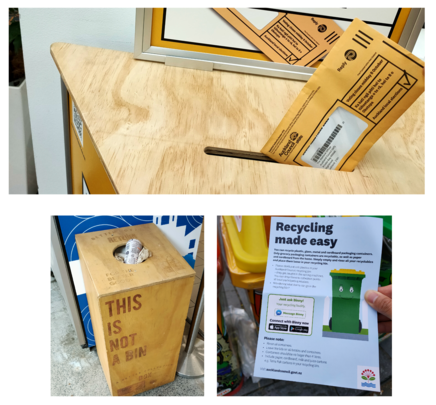 Stop "wasted" votes influencing Auckland's future - change to the Single Transferable Vote systemOur Auckland local elections currently use the First Past the Post (FPP) voting system. If the candidate we vote for doesn't make the threshold, our votes are "wasted". There is a modern alternative. The Single Transferable Vote (STV) system will allow us the freedom of choice to rank our candidates and recycle our "wasted" votes. When our votes are guaranteed to count like this, it shows more respect to our individual sovereignty and needs, rather than forcing us to vote under the duress of the fear of "wasted" votes "vote-splitting". At least 1,863 voters wasted their vote when they voted for me in the Waitematā Local Board elections this year, under the current voting system (FPP). My favorite local board candidate would have been voted in if those 1,863 "wasted" votes would have been recycled under STV for him. I didn't know such an awesome fellow was running until I was already nominated, and I continued to run partly because there was a possibility that we could both be elected, and partly so I could speak up and illustrate with a poignant lived experience that the ability to recycle votes does matter in practice and not just in theory. Under FPP, neither of us two made the voting threshold. We wasted at least 9,139 votes - that's 10,000 people who spent at least an hour on this, 10,000 total work-hours of people doing their civic duty, wasted.... That's a problem for all FPP democracies, but there is a local solution already ready for us if you want to choose it! Under Section 29[1] and 30[2] of the Local Electoral Act 2001, if I present Auckland Council with signatures with names and addresses of 5% of all Auckland enrolled voters, then they are forced by central government legislation to hold a vote on changing our voting system to, say, STV. STV doesn't have wasted votes like our current one. Other more progressive cities in New Zealand[3], such as Palmerston North, which I'm proud to originate from, have already had and passed voting system referendums to switch to STV, because it allows better representation and limits the possibility of duopoly party voting blocs just aiming to do the bare minimum to capture the middle vote and play to fears of "wasted" votes. STV allows voters to vote with truth in their hearts for what they truly believe is their best choice, safe in the knowledge that that vote will be reused and recycled towards their other choices if it is "wasted". This respects individual sovereignty better than FPP, because voters are less able to be manipulated by fears of vote-wasting. I would like to bring the wider choices that the residents of these other areas enjoy in their voting system, to Auckland. If you can help me with this, then please sign this petition with your name and electoral enrolment address in the Auckland region. I will not use your name or address for any other purpose other than Section 29 of the Local Electoral Act 2001. It is illegal under New Zealand law (the Privacy Act) for me to do anything else with your personal information except this. So please vote, for better voting! Ngā mihi, Andi Liu / 刘安迪 2022 Waitematā Local Board candidate and Waitematā and Gulf Ward candidate References: [1] https://www.legislation.govt.nz/act/public/2001/0035/latest/DLM93979.html#DLM93979 [2] https://www.legislation.govt.nz/act/public/2001/0035/latest/DLM93985.html#DLM93985 [3] https://www.dia.govt.nz/diawebsite.nsf/wpg_URL/Resource-material-STV-Information-Index51 of 100 SignaturesCreated by Andi Liu
-
 TVNZ, pull the FBoy Island NZ show immediately!We believe that New Zealand can be a country where all women are safe, seen and celebrated. As a broadcaster, you have a responsibility not to perpetuate stereotypes that have a high likelihood of harming women. It is 2022 and we deserve and demand better. Simon, you’re better than this, TVNZ is better than this. Sort it out, Simon. Pull FBoy Island NZ today. Tania Domett, Erin Jackson and Angela Meyer for Project Gender8,093 of 9,000 SignaturesCreated by Project Gender
-
 Immediate Reinstatement of Core Funding for Arts On TourThe removal of core funding to Arts on Tour New Zealand is a slap in the face to small communities and towns around the country.(1) We demand Creative New Zealand immediately reinstate all funding to enable Arts on Tour to continue their terrific work in bringing vibrant and diverse live performance to these communities, and just as importantly, facilitate work opportunities for a wide range of actors, performers and musicians. The choice of Creative New Zealand to cut this funding suggests that small towns and communities are irrelevant, invisible and undeserving of high quality New Zealand cultural experiences through a touring arts programme. For those of us who live in these areas, we are already under siege with the closure of essential services: banks, post offices and health services. The arts are what make a difference to the social well-being of our communities. Arts on Tour NZ has done a sterling job in making the performing arts accessible to often overlooked parts of the country. Let them carry on with it as they have done so successfully over the past twenty-seven years. https://vimeo.com/756109379/75ded89975 References: 1. https://www.stuff.co.nz/the-press/news/129950443/arts-groups-across-new-zealand-lose-core-government-funding2,766 of 3,000 SignaturesCreated by Loretta Bush
 -
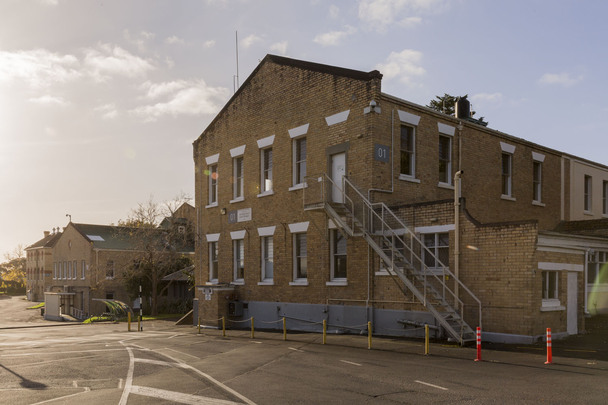 Save all of Pt Chev's heritage Building One & realign the internal Gate 1 road!Solution vs Demolition: Our local and extended community love this building. We respect its past & the aspirations of mana whenua and Te Tiriti obligations. The Unitec/Carrington site is about to become an urban development of up to 3500 homes. We support affordable, well designed housing, open spaces and amenities that can coexist with scheduled heritage and an alternative internal roading access design. The building has had a history as a psychiatric hospital (1865-1992) & as the home of Unitec’s vibrant Architecture and Design School (1994-2021). Our community trust's 2020 feasibility study for MHUD on the interim adaptive reuse of Carrington Hospital's Building One had overwhelming community support to activate Building One as an Arts, Creative & Wellbeing hub. Built in 1865 and finished in 1905, it has a footprint of 8500sqm, over 2 main levels, with 300 studio spaces including a gallery, library & café. Partial demolition will remove over 600sqm of unique spaces that could have been used by community groups & creatives such as visual artists, dancers, film makers & educators. This building & environs will lose its connection to our community if partially demolished. This is an important valued landmark and reference point for our everyday neighbourhood interactions & wellbeing. We love the spaces, the ecology, the memory, the heritage & support the exciting opportunities to come. We need your help to share our message with people who care about heritage, can influence decision makers & show that the new road option is a "win/win, both/and" vs "either/or" solution. Join our Building One page here: https://www.facebook.com/groups/318949932076119 Read more about our proposed solution here: https://www.pcset.org.nz/projects1,353 of 2,000 SignaturesCreated by Chris Casey
 -
 Reduce Alcohol Harm: Pass the Bill!Most of us want to live, work, play and raise our children in communities that are healthy, safe and connected. When our communities are safe and healthy we give ourselves and our families the best chance to thrive, grow, and enjoy the things that are most important to us. But the massive and varied harms to health, relationships, and livelihoods from alcohol gets in the way of so many of the things that are important to us. We currently have a rare opportunity to address this problem and make our communities better places to live, work, and play with the Sale and Supply of Alcohol (Harm Minimisation) Amendment Bill about to go before parliament. Sign this petition to ask your Member of Parliament, representing your community and our nation, to support the best chance for alcohol reform we have had for ages. What makes the Sale and Supply of Alcohol (Harm Minimisation) Amendment Bill so great? ⭐️ The Bill will remove the special appeals process from local alcohol policy development, so that communities, not alcohol retailers, have a greater say when it comes to local decisions around where, when and how alcohol can be sold. ⭐️ The Bill will also end alcohol advertising and sponsorship of broadcast sport, implementing some of the recommendations from Sir Graham Lowe’s 2014 Ministerial Forum on Alcohol Advertising and Sponsorship. These measures are among the strongest tools available to turn around heavy drinking in our communities. And they are long overdue. Our communities have suffered the effects of our failed liquor laws. Māori, Pasifika and low income communities continue to shoulder the greatest burden of alcohol harm. Alcohol retailers have endlessly appealed Councils’ local alcohol policies so that they no longer resemble the wishes of their constituent communities. Councils’ have expressed frustration at their alcohol policies being watered down to appease the alcohol industry. For this reason, many Councils have formally endorsed the Bill. Ending alcohol sponsorship of broadcast sport serves to protect current and future generations from the established harms of alcohol marketing, especially children who are heavily influenced by their sporting heroes. Winding up alcohol sponsorship of broadcast sport allows communities to experience the richness of connection and community through a healthy activity, without being harmed by the influence of alcohol advertising. Reducing alcohol harm means better mental health, improved child wellbeing, reduced family harm, less pressure on our health system, less pressure on police and emergency services, and improved productivity and economic growth. Alcohol harm impacts almost everything we care about as New Zealanders. Urge your Member of Parliament to be brave and go on the public record with their support of this Bill. Ask them to vote for this Bill at first reading and engage in the Select Committee process. Let’s not squander this opportunity. Together, we can create safer, healthier and fairer communities. The next steps for the Bill: The Bill could be debated as early as August. So it's important to show your support now! The Bill needs 61 votes from MPs to pass its first reading in Parliament so it can proceed to Select Committee. Then communities will be able to have their say on the Bill through the public consultation process. Read our evidence-based factsheets for more information: 👀 The Sale and Supply of Alcohol (Harm Minimisation) Bill https://www.ahw.org.nz/Portals/5/Resources/Fact%20Sheet/2022/Factsheet_Alcohol_Harm_Minimisation_Bill_2022.pdf 👀 Alcohol Sponsorship of Sport in Aotearoa New Zealand https://www.ahw.org.nz/Portals/5/Resources/Fact%20Sheet/2022/AHW%20Alcohol%20sponsorship%20factsheet%20June%202022.pdf For more information, check out our website at www.passthebill.org.nz. This community action initiative is a collaboration between Alcohol Healthwatch and Hāpai te Hauora.8,239 of 9,000 SignaturesCreated by Alcohol Healthwatch
-
 Ensure funding and timely access to diagnosis for neurodivergent peopleEveryone, no matter where they live, or how unique their minds are, deserve to have the support they need to live full and happy lives. But at the moment, someone seeking a diagnosis for autism, ADHD, dyslexia and other cognitive, learning and sensory disabilities, has to navigate a complicated and stressful system. Wait times within the public system can be years long and the cost to go privately can be anywhere from $500 - $3500. This means that many people have to go without a diagnosis for long periods of time and therefore miss out on access to the support they need. This is an unfair system that needs to change. People should not have to be privileged or wealthy to access the assistance they require.418 of 500 SignaturesCreated by Saoirse Lynch
 -
 Our children with Crohn’s disease and ulcerative colitis deserve the same care as adults!New Zealand has one of the highest rates of Crohn’s disease and ulcerative colitis (known as inflammatory bowel disease or “IBD”) in the world. These diseases are chronic and relapsing illnesses, characterised by sudden flares, emergency department visits, frequent hospitalisations, and, often, surgery. It is estimated that there are 20,792 New Zealanders with these diseases and the number is expected to double in the next ten years. Many of these patients are children. While almost every DHB in NZ funds adult IBD specialty nurses, there is not a single paediatric IBD nurse in all of New Zealand, not even at our largest paediatric centre, Starship Hospital. The issue of equity for this very vulnerable segment of our population needs to be raised. The critical role of the IBD nurse is to provide direct, immediate medical access and assessment to children when their disease suddenly flares. In these situations, it is prompt treatment which prevents lengthy hospitalisations and life-altering surgery. In addition, IBD nurses are the primary educators of both patients and caregivers, they manage immunosuppressive medications, ensure that preventative measures such as vaccinations and screening procedures are up-to-date, provide advice on diet, manage side effects of medications, and ensure compliance with treatment regimens. Not only does the work of the IBD nurse improve patient outcomes, but it significantly frees up time for their physician colleagues to perform other tasks. The impact of the IBD Clinical Nurse Specialist on patient outcomes and hospital costs has been well and repeatedly documented. A recent study reported in the British Medical Journal in 2020, demonstrated a one-third decrease in hospitalisations in the year following the addition of an IBD nurse to the GE team (P=0.002). Similar results were reported in a study from the Royal Adelaide Hospital in the Journal of Crohn’s and Colitis. Hiring a single nurse will not only save taxpayers tens of thousands of dollars, but, most importantly, will help keep our children out of the hospital and out of surgical theatres. It will ensure that our children have access to the same quality care that is routinely available to adult IBD patients in New Zealand and to other children throughout the world.1,561 of 2,000 SignaturesCreated by Richard Stein
 -
 Healthy Food and Drink in SchoolsWe believe that every child and young person in New Zealand deserves the best start to life and what they eat and drink is vital for optimal physical and mental health. Research in New Zealand has highlighted ‘free sugars’ as contributing significantly to high rates of poor physical health, poor oral health, diabetes and other health-related diseases.[1] The consumption of free sugars in sugar sweetened beverages contributes to 26% of the total sugar intake of children.[2] Studies conducted by the Environmental Health Indicators New Zealand (EHINZ) note that dental decay is now the most common disease reported among children in New Zealand. But sugary drinks are not the only problem. The food our children eat also needs to be healthy and nourishing. Research has demonstrated that children who eat healthy food are better behaved and better able to concentrate in class and learn.[3] Education is key to improving health outcomes in our community and schools need to lead the way. Promoting healthy food and then selling unhealthy food in our school canteens does not make sense. We already have Healthy Food Guidelines, Schools need to be given the duty and support to implement them. [4] For more information, please contact: Shona Jaunas (President Open Forum for Health Information) [email protected] https://www.openforumforhealthinformation.com/nz-schools-consultation [1] Free sugars are defined by the World Health Organisation as monosaccharides and disaccharides added to food by both the manufacturer and consumer, including sugars naturally present in honey, syrups, and fruit juice. [2] Sundborn et al, “New Zealand’s growing thirst for a sugar-sweetened beverage tax”, New Zealand Medical Journal, 2015. [3] Rucklidge and Kaplan, “The Better Brain, How Nutrition Will Help You Overcome Anxiety, Depression, ADHD and Stress, Vermillion, 2021 [4] 20210927-Nutrition-Guidance-Formatted-FINAL.pdf (education.govt.nz)1,369 of 2,000 SignaturesCreated by Open Forum for Health Information New Zealand