-
 Pledge: Vote for KaiWe’re food producing champions. We should be able to feed our people. Too many children go to school hungry. Too many people are skipping meals because the money runs out before the week does. Too many of us are making tough choices between nutritious food, rent, power, health care, fuel and other essentials. As a nation, we’ve never been short of ingenuity when something needs fixing. Our food system needs redesigning, and we all need to work together to find the solutions. We need a commitment to a long term plan to deal with the underlying causes of food insecurity, rather than just muddling along with an increasing amount of hungry families needing foodbanks. We are everyday people: iwi, hapū, whānau members, mums and dads, aunties and uncles, farmers, fishers and food producers, health workers, community groups, educators, businesses, organisations, and eaters. No matter who we are or where we are from, we all agree food is not getting the serious political attention it deserves, and that needs to change. We can do better. We are calling on all political parties to make a genuine commitment to a food system that works for everyone. We want to see this commitment before the election so we can support those with the best solutions. Specifically, we want to see: A long-term plan. Affordable, healthy kai for everyone. Farming and food that looks after animals, the land and the ocean. A fair go for local producers, manufacturers and food businesses. Good food environments for our tamariki / children. A food system grounded in Te Tiriti o Waitangi. Communities having a decision-making role in their kai / food system. Celebration and protection of our food cultures. We believe Aotearoa New Zealand can become a place where everyone has access to good food, where local kai systems thrive, food producers are valued, communities are resourced and exports are a vital part of our economy. We’re not asking political parties to agree on everything but access to kai is fundamental. By signing this pledge to vote for kai you are sending a message to political parties across the spectrum that you expect to see robust policies that will strengthen our food systems. We will update everyone who signs this pledge about what commitments each political party makes in relation to our demands.2,097 of 3,000 SignaturesCreated by Angela Clifford
 -
 Restore Funding for Wellington’s Citizens Advice BureauThese cuts will hit hardest for: • people struggling with the rising cost of living; • workers facing redundancy or employment issues; • tenants dealing with housing insecurity; • migrants and former refugees; • disabled people, older people, and students; • whānau experiencing hardship or isolation. Citizens Advice Bureau Wellington provides vital free information, advice, and support including budgeting advice to more than 11,000 people every year. With the impacts of the high cost of living, continuing public service cuts, and growing job losses in Wellington, the support CAB provides is more critical than ever. Wellington CABs are powered by over 125 dedicated volunteers, but volunteers alone cannot sustain the service. Continued funding is essential to maintain physical spaces where people can access in-person support, and to retain the small team of staff who coordinate services, train volunteers, and ensure the CAB service remains accessible and effective. Wellington CABs need every cent of the approximately $240,000 per annum they have been receiving from Council to support Wellingtonians. Yet Council has slashed that funding to just $100,000. This puts at risk the survival of the CAB service in Wellington. For decades, CABs have helped people navigate tenancy issues, employment disputes, immigration processes, financial hardship, family challenges, and access to government, council and community services. CAB services are free, confidential, independent, and available to everyone. At a time when community need is increasing, Wellington City Council should be strengthening this essential service – not undermining it. This includes other community groups that we work alongside. We ask Wellington City Council to: • Reverse the funding cuts to Wellington CABs • Commit to a sustainable long-term funding partnership for CAB services in Wellington. Removing this funding will not remove the need. It will simply remove one of Wellington’s most trusted and accessible sources of support. Sign the petition and call on Wellington City Council to restore full funding for Wellington Citizens Advice Bureau. Please share widely. References • PwC, Service Review Citizens Advice Bureau Wellington (December 2018) • ImpactLab, Citizens Advice Bureau North Shore Incorporated Relationship-related Enquires ImpactLab GoodMeasure Report (October 2022) - showed CAB services provided a $1:$13.20 social return on investment. Other ways you can help • Contact the Mayor and your local Councillors to tell them you oppose the cut to Wellington CAB funding and ask them to fully reinstate the funding and provide long term funding for the CAB. Find details about your local councillor here https://wellington.govt.nz/your-council/about-the-council/mayor-and-councillors/councillors • Spread the word to friends, whānau, and your community. • Help people who are digitally excluded to sign the petition here or in person at their local CAB.9,890 of 10,000 SignaturesCreated by Sacha Green
 -
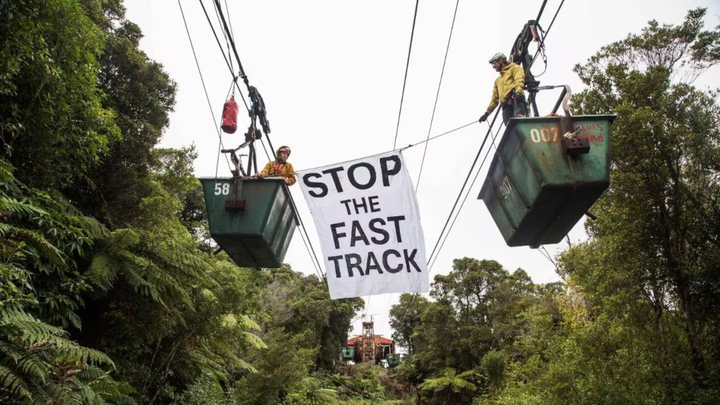 Repeal Fast-Track laws and protect people’s rights to hold polluters accountable in court.The Fast-Track is a War on Nature Many of the proposed fast-track projects threaten conservation land - ecologically essential landscapes which have been placed under protection for future generations. Fast-track legislation would hand over this irreplaceable public land to private corporations with a known track record of environmental destruction. For example, if allowed to proceed, Bathurst’s proposal [2] under the fast-track approvals process would devastate the 40-million-year-old landscape on the Denniston Plateau. Open-cast mining destroys everything in its way including the habitat of flora and fauna that don’t exist anywhere else in the world! All future generations will be deprived from enjoying this unique geographical treasure so that an overseas owned coal company can make a quick buck. The Fast-Track Undermines Democracy A recent amendment [3] would also block New Zealanders from holding these companies accountable for the destruction that they cause. For example it would stop Mike Smith’s case [4] against major polluters from being heard in court even though the Supreme Court ruled that it should go to trial! This is an example of government over-reach that would undermine the rule of law and the power of the courts to hold corporations accountable for their harmful actions. Fast-Track Undermines Te Tiriti o Waitangi It breaches Te Tiriti principles by bypassing the need for consultation and undermining the tino rangatiratanga of iwi in making decisions about Māori whenua. Even in the English translation of the treaty, the crown said it would guarantee Māori “the full exclusive and undisturbed possession of their lands, forests & fisheries”. That promise was long-since broken by the confiscation of land, the fast-track now threatens to destroy those very forests and fisheries. The Fast-Track Prioritises Corporate Profits over Community Health Fast-track cuts local communities out of the decision-making processes and then blocks their legal avenue for redress. Taking away these legal pathways protects polluters at the expense of communities, the environment and future generations. This process and the current government prioritise profit over life. Extractive (mining) industries provide short-term profits for the companies and leave communities to manage long-term environmental devastation. For example, in 2024 the taxpayer spent $3.67 million on acid mine drainage remediation alone, whilst only $3.7 million was collected in mining royalties [5]. There is a Better Path We believe in Kaitiakitanga — our shared responsibility to protect and care for the whenua for those who come after us. We believe in democracy, where every community has a voice and the power to influence decisions that impact them. We believe that Te Tiriti o Waitangi must be honoured and that local knowledge and expert advice must guide decision-making. We believe in a future where people and nature can thrive together. That is why we call on the New Zealand Labour Party to commit to; • Repeal the fast-track legislation in full, • Revoke all mining consents granted under the fast-track process, • Oppose any legislation that would block climate accountability cases (like Mike Smith’s) from being heard by the courts, and commit to revoking this legislation if you get into government. Now is the time to act — to protect the people and land of Aotearoa from a fast-track to devastation. Sign the petition today! For more ways to participate, check out the Climate Liberation Aotearoa website: HOME - Climate Liberation Aotearoa References 1. The Royal Forest and Bird Protection Society https://www.forestandbird.org.nz/resources/flawed-fast-track-bill-silences-impacted-communities Greenpeace Aotearoa https://www.greenpeace.org/aotearoa/explore/fast-track-approvals-bill/?#h-fast-tracked-destruction The Parliamentary Commission for the Environment https://pce.parliament.nz/our-work/news/fast-track-approvals-bill-poses-significant-risks-to-the-environment/? University of Auckland https://www.auckland.ac.nz/en/news/2024/04/24/fast-track-approvals.html? 2. Bathurst Resources Limited https://bathurst.co.nz/assets/reports/2024-10-09-Projects-named-on-Fast-Track-Approvals-Bill.pdf 3. ICLG https://iclg.com/news/23858-new-zealand-moves-to-block-climate-lawsuits-ahead-of-landmark-trial/ 4. E-Tangata https://e-tangata.co.nz/comment-and-analysis/mike-smith-this-is-corrosive-to-democracy/ 5. Newsroom https://newsroom.co.nz/2024/12/02/all-of-govts-2024-coal-earnings-spent-treating-damages-at-a-single-mine/6,101 of 7,000 SignaturesCreated by Climate Liberation Aotearoa
 -
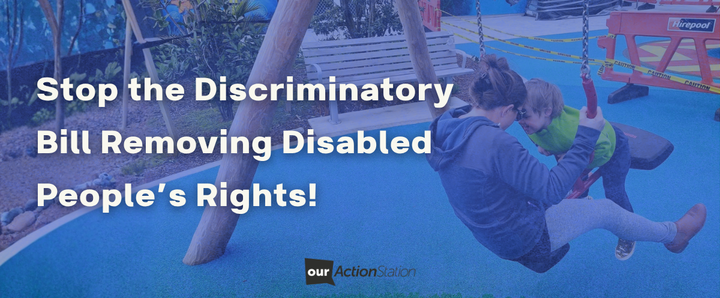 Stop the Discriminatory Bill Removing Disabled People’s Rights – Ensure Fair Due ProcessDisabled people and their carers already face huge barriers just to live, work and care. This bill sets a dangerous precedent and strips away legal rights that other New Zealanders still have. It cancels existing court cases, shuts down claims that were filed properly and on time, and stops disabled people and their families from asking the courts to decide if they have been underpaid for years of essential care work. The bill will also prevent the Human Rights Commission and the Health and Disability Commissioner from taking action against the government for unlawful discrimination against people with disabilities and their whānau. No other group of workers is being targeted and exploited in this way. If any other employer tried to pass a law that said “you can’t take us to court any more, and your current cases are wiped”, people would be outraged. Yet that is what this bill does to disabled people and their families, while politicians claim it 'changes nothing'. This is about whether disabled people and their carers are treated as equal under the law. We should not accept a two‑tier system where some people can still enforce their rights in court, while disabled people and their families are told their rights can be taken away by a fast‑tracked bill. Disabled communities and their whānau are already facing unfair circumstances and enormous strains. Now, more than ever, we need your support to stop this government from weaponising our needs and making us feel less valued in society. Make sure to sign up for further updates when you sign the petition so we can let you know the details of the select committee process.16,458 of 20,000 SignaturesCreated by Victoria Coleman
-
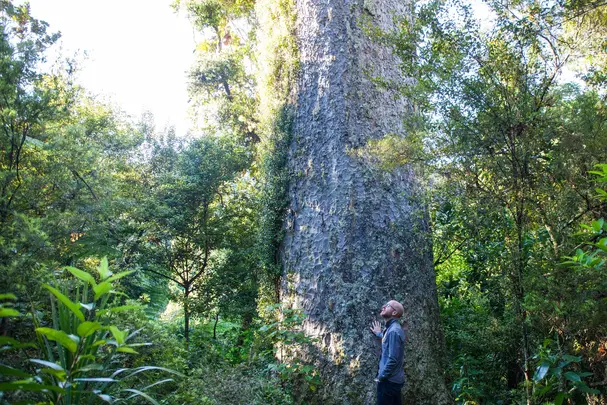 Save the Waitākere Ranges Heritage AreaThe Waitakere Ranges are precious. They provide Auckland with fresh air and clean water. They provide us with serenity and artistic inspiration. They have been described as “the lungs of Tamaki Makaurau” and Te Wao Nui o Tiriwa is a very effective sequesterer of carbon. To address threats to the Ranges, the Waitakere Ranges Heritage Area Act was passed in 2008. It has worked well at holding development pressures at bay and maintaining the beauty and uniqueness of the Ranges. Law changes now before Parliament risk gutting the protections in the Waitākere Ranges Heritage Area Act 2008. The Heritage Area Act cross-references the Resource Management Act. But the Government is replacing the RMA with the Planning Bill and the Natural Environment Bill without updating those references — which would render large parts of the Heritage Area Act meaningless. That would strip consent processes, Regional Spatial Plans and Land Use Plans of their duty to protect the Ranges. In short: the Ranges could be weakened by a thousand cuts. Subdivision of the Ranges would be more likely and decision makers would not have to have as one of their guiding principles the protection of the Ranges. The Bill is reported back to Parliament on June 26. Urgent action is needed if we are to fix this before then. Together we can protect the Waitākere Ranges Heritage Area for future generations. Please sign and share this petition with friends and family. For more information please refer to this Environmental Defence Society article in the Herald and the Waitākere Ranges Local Board's submission can be read here.8,176 of 9,000 SignaturesCreated by Greg Presland
 -
 Bring back Tiriti-based, inclusive Relationships & Sexuality Education in schoolsThe importance of effective violence prevention cannot be overstated: for example, around a third of women in Aotearoa NZ have experienced sexual violence [8] and many more experience non-sexual relationship violence. We need to use all the tools we can to change such entrenched violence. Thank you for signing and sharing this petition with friends and whānau, in solidarity with all rangatahi, women and targeted groups. Together, we can hold politicians accountable and ensure our young people receive the respect and care they need to flourish. References [1] 2020 Relationships & Sexuality Education guidelines, Years 1-8: https://insideout.org.nz/wp-content/uploads/2025/04/RSE_1_to_8_2.pdf Years 9-13: https://insideout.org.nz/wp-content/uploads/2025/04/RSE_9_to_13_2.pdf [2] Consultation on Proposed Health & PE Curriculum including Relationships & Sex Education, closes 24 April 2026. https://newzealandcurriculum.tahurangi.education.govt.nz/new-zealand-curriculum-online/new-zealand-curriculum/learning-areas/health-and-physical-education-curriculum/5637165585.c Everyone - students, parents, teachers, members of the community - can make their own submission. See Auckland Women’s Centre submission guide here: https://awc.org.nz/2026-rse-submission-guide/ [3] For example, 24 organisations and experts sent an open letter to Minister Stanford in May 2025, criticising the exclusion of gender diversity. https://sexualwellbeing.org.nz/consortium-of-informed-voices-sends-open-letter-on-relationships-and-sexuality-education-to-minister-stanford/ To our knowledge, the Minister has never engaged with the signatories regarding their concerns. Auckland Women’s Centre (and other organisations) have also written to the Minister, and already given feedback on an earlier draft – Auckland Women’s Centre’s submission here: https://awc.org.nz/wp-content/uploads/2025/04/AWC-to-Minister-Stanford-re-RSE-framework-.pdf The feedback report on the first round of consultation (May 2025) is here: https://files-au-prod.cms.commerce.dynamics.com/cms/api/qwxsnqcpfm/binary/MLeDUE [4] Submission re RSE, May 2025, from AP Jade Le Grice, Morgan Tupaea, and Fern Smith, researchers at Te Pūtahi o Pūtaiao | Centre for Kaupapa Māori Science, University of Auckland [5] Sexual Wellbeing Aotearoa media release on the government’s second draft RSE October 2025 https://sexualwellbeing.org.nz/new-curriculum-regressive-and-fractured/ [6] Backbone Collective May 2025 submission https://static1.squarespace.com/static/57d898ef8419c2ef50f63405/t/685874c7e0c5475c87cbe718/1750627527977/RSE+draft+framework+questionnaire+and+letter+to+Minister+of+Education+Erica+Stanford+9+May+Backbone+Collective+%281%29.pdf [7] Education Review Office (2024) Technical report: Review of relationships and sexuality education:.https://www.evidence.ero.govt.nz/documents/technical-report-review-of-relationships-and-sexuality-education [8] NZ Crimes & Victims Survey 2019, https://www.justice.govt.nz/assets/NZCVS-findings-core-report-2018-fin-v1.3-for-release.pdf p82 [9] For example, see Le Grice, J., & Braun, V. (2018). Indigenous (Māori) sexual health psychologies in New Zealand: Delivering culturally congruent sexuality education. Journal of Health Psychology, 23(2), 175-187; Tupaea, M., & Le Grice, J. (2024). Mana Tamaiti: Un/binding gender, sexuality and reproductive autonomy with Mātauranga Māori and intergenerational dialogue. In Gender Un/Bound (pp. 241-255). Routledge. [10] Hohou te Rongo Kahukura submission on RSE, May 2025. [11] AWC op ed “Why Women Need to Stand Up for Trans Rights” https://awc.org.nz/why-women-need-to-stand-up-for-trans-rights/3,669 of 4,000 SignaturesCreated by Auckland Women’s Centre
 -
 Stop early labelling in primary school reports (2026)From 2026, primary schools will report children’s learning using national labels: Emerging · Developing · Consolidating · Proficient · Exceeding For children aged 5–7, this approach is developmentally inappropriate. Learning at this age develops unevenly, at different rates for different children, and early labels often reflect developmental readiness and support needs rather than true understanding or potential. This matters because: • Early learning is non-linear Children aged 4–7 show wide, normal variation in attention, language, memory, and self-regulation. Progress does not happen in neat stages. • The labels describe support levels, not learning ability Terms like Emerging and Developing explicitly reference the amount of support a child needs, which risks equating support needs with lower ability. • Children within the normal developmental range are labelled Many children will sit in Developing or Consolidating simply because their learning is still forming, not because they are behind. • “Developing” and “Consolidating” are easily read as deficit For whānau, these labels are easily interpreted as “not meeting expectations”, even when development is typical. • Neurodivergent children are particularly disadvantaged These children may understand concepts but struggle to demonstrate learning in standardised ways due to differences in communication, processing speed, regulation, or anxiety. • Wellbeing and confidence are affected Early labelling can undermine confidence, increase stress, and discourage children from taking learning risks. • This approach has caused harm before New Zealand previously moved away from national benchmarking systems after evidence showed they narrowed learning and negatively affected wellbeing. Early learning should focus on growth, relationships, and support, not categorising children on a national scale.554 of 600 SignaturesCreated by Kate Muir
 -
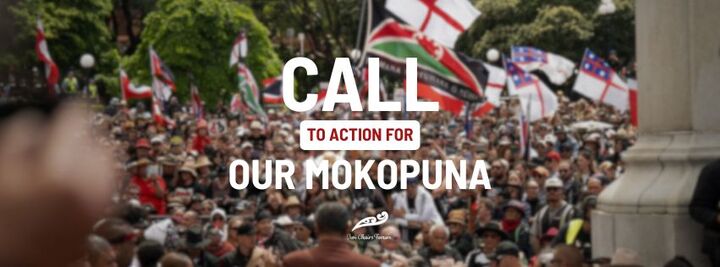.jpg) Protect Te Tiriti in EducationAotearoa should be a place where everyone, regardless of their background, is respected and part of a vibrant connected community. Where everyone feels a sense of belonging and knows their children will feel the same. Te Tiriti o Waitangi is the blueprint to making this future a reality, it guides us to live peacefully and respectfully together so that everyone can thrive. It is vital that our children learn the importance of honouring Te Tiriti o Waitangi and continue fostering respectful and reciprocal relationships between tāngata whenua and tāngata Tiriti (people of Te Tiriti). Education is where Te Tiriti o Waitangi is made real for every generation. Section 127 of the Education and Training Act ensures that schools, early learning services and tertiary institutions give effect to Te Tiriti — shaping how our children learn about identity, belonging, and partnership. Removing this section is not a technical change — it is a step backwards. It erases the Crown’s responsibility to honour Te Tiriti in the one place every child in Aotearoa passes through: our education system. Te Tiriti is not an add-on; it is the foundation of how we work together as iwi and Crown for the wellbeing of all tamariki. We call on the Government to retain Section 127 and reaffirm its commitment to Te Tiriti o Waitangi in education.24,086 of 25,000 SignaturesCreated by National Iwi Chairs Forum
Protect Te Tiriti in EducationAotearoa should be a place where everyone, regardless of their background, is respected and part of a vibrant connected community. Where everyone feels a sense of belonging and knows their children will feel the same. Te Tiriti o Waitangi is the blueprint to making this future a reality, it guides us to live peacefully and respectfully together so that everyone can thrive. It is vital that our children learn the importance of honouring Te Tiriti o Waitangi and continue fostering respectful and reciprocal relationships between tāngata whenua and tāngata Tiriti (people of Te Tiriti). Education is where Te Tiriti o Waitangi is made real for every generation. Section 127 of the Education and Training Act ensures that schools, early learning services and tertiary institutions give effect to Te Tiriti — shaping how our children learn about identity, belonging, and partnership. Removing this section is not a technical change — it is a step backwards. It erases the Crown’s responsibility to honour Te Tiriti in the one place every child in Aotearoa passes through: our education system. Te Tiriti is not an add-on; it is the foundation of how we work together as iwi and Crown for the wellbeing of all tamariki. We call on the Government to retain Section 127 and reaffirm its commitment to Te Tiriti o Waitangi in education.24,086 of 25,000 SignaturesCreated by National Iwi Chairs Forum -
 Oppose the Amendments to the Marine and Coastal Area ActWe oppose the amendments because they will: • Override Treaty principles that protect the integrity of all Treaty-based mechanisms. • Undermine Treaty articles on protection and partnership. • Deprive all whānau, hapu and iwi of their legal rights to the marine and coastal environment. • Strip Māori of the kaitiaki status required to safeguard our marine and coastal ecosystems from environmentally hazardous development. • Require a level of control over coastal areas that is incompatible with tikanga Māori, and impossible to achieve due to the historical disruption through colonisation.21,559 of 25,000 SignaturesCreated by Hone Harawira
 -
 Protect Voter Privacy: Expand Access to the Hidden Electoral Roll in AotearoaEvery person in Aotearoa should be able to enrol and vote safely, without fear that being on the electoral roll could put them or their whānau at risk. Enrolling should protect people’s right to participate in democracy while also upholding their personal safety and wellbeing. Currently, the electoral roll in Aotearoa is public, meaning names and addresses are openly accessible. For many people, including survivors of violence or those with past convictions, this creates real safety risks. While the hidden (unpublished) roll exists, it is very hard to access and requires extensive proof of current risk. This leaves many vulnerable people unprotected. It also undermines whānau throughout Aotearoa who don’t have the financial stability to get legal representation to support their application. For example, my dad (an ex-prisoner) didn’t feel safe enrolling in 2023. He applied for the hidden roll but was denied, even though he was genuinely worried people from his past could find him and put him and our family at risk. This could be achieved by: • Expanding access to the hidden roll by broadening eligibility so people with credible past risks can apply. • Making the application process faster, clearer, and easier to understand. • Ensuring decisions are made quickly, with clear reasons if denied. • Create a simple, accessible appeals process for those turned down.293 of 300 SignaturesCreated by Asher Thompson
 -
 Say YES to “Access” #YesToAccessNZ | Words shape worldsWhy this matters ““Commit to replacing ‘inclusion’ with ‘access’ on 3 December. Maybe it sticks. Maybe it doesn’t. Maybe it’s the first step toward a more equitable Aotearoa.” Access is a right, not an invite. That’s why. ” 3 December 2025 is International Day of Persons with Disabilities and is the perfect moment to flip the script, start with words, and build the access-first Aotearoa we all deserve. Words shape worlds Did you know? “Inclusion” comes from the Latin includere - in (“into”) + cludere (“to shut, close off”). To include means to be invited into something that was closed to you. You’re still outside - until someone lets you in. Access, from accessus, means “to enter or pass through without barrier.” Not by permission. By right. “Inclusion is margarine. Access is the real butter.” You’ve grown up with “inclusion” as the go-to word. It’s soft. It’s comfortable. It’s on someone else’s terms. There are gatekeepers who “let you in,” “add you in,” “invite you in.” Access is hard - but worth it. It means building places, spaces, and systems from the start—not retrofitting after the fact. It means disabled people aren’t guests. We’re already here and leading. Why Access? In a world where Access is the starting point, not the add-on: • Disabled people live lives of substance, not subsistence • Every space—physical, digital, cultural, political—is designed barrier-free, with disabled people shaping the decisions that affect us • Access is built in: to homes, schools, workplaces, marae, theatres, cities • We are Diversity, not Deficit • We are experts in our own lives, not exceptions to be managed • We inhabit time and space with equity, not as invitees to worlds not made for us • Our identities - not labels - are seen. Our ways of being are sources of insight, not problems to fix This isn’t a dream. It’s the Aotearoa we can build when Access comes first. This isn’t just about ramps and captions Access is multi-dimensional: physical, cultural, emotional, financial, spiritual, intellectual, collective, and individual. Swapping “inclusion” for “access” reframes disability not as a problem to accommodate, but as a matter of rights, design, and justice. “When we say “inclusion,” exclusion still wins. If you can be “included,” you were already excluded. Access, once embedded, cannot be denied. ” Swapping “inclusion” for “access” is more than a language fix. It's an entire mindset shift. What’s the difference? A real life example from what we know - the arts. An 8 - 10 performance season might offer: • 2 sign-language interpreted shows • 1 audio-described show • Wheelchair seating for 4 people per show That’s Inclusion - a few seats at someone else’s table. On their time, Now imagine: • Every performance is NZSL interpreted and audio described • The venue adapts seating in real time for wheelchair users That’s Access - designed with us, led by us, from the very beginning. Inclusion is soft, almost easy, and on someone else's terms, there are decision makers, gatekeepers who 'let' you in, add you in, 'invite' you in. Access is hard, but it means you actively make the effort to build the places, spaces and societies for all from the very start, not accommodate after by invite only. The ask On 3 December 2025, swap “Inclusion” for “Access” in: • Official communications • Policies • Job titles • Public events Witness what shifts. Maybe it sticks. Maybe it doesn’t. But it might just be the spark. We say yes to Access - every day. You can too - even if it’s just for one day. Just like these artists and allies here at this link: Yes to Access. This campaign is disability-led, conceived over two years by disabled artists, researchers and creators with Touch Compass, and supported by allies across Aotearoa. ✊🏽 Words shape worlds. Swap the word. Shift the world. Sign the petition. Share it! #YesToAccessNZ791 of 800 SignaturesCreated by Touch Compass Aotearoa New Zealand
-
 NZ Government Sanction Israel NowSince October 2023 the world has witnessed the state of Israel perpetrate innumerable war crimes and human rights violations against the people of Gaza [1], while the violence, repression, and forced displacement of Palestinians in the West Bank and East Jerusalem has escalated [2]. But this violent oppression has been the modus operandi of the decades-long Israeli occupation. The International Court of Justice [3] along with international human rights organisations [4] have repeatedly laid bare the Israeli occupation’s systematic breaches of international law, discriminatory apartheid regime, and abuses of Palestinian human rights. People of conscience in Aotearoa New Zealand have been steadfast in their opposition to Israel’s disregard of fundamental human rights of Palestinians, international legal frameworks and institutions. Across the country we have been standing up for our common humanity and to maintain the integrity of the international law that is meant to keep us all safe. The time of impunity for Israel's occupation and unlawful and dehumanising behaviour must end. We demand that the New Zealand Government impose economic, diplomatic and military sanctions on Israel as a concrete consequence for its breaches of international law and human rights violations. What action can New Zealand take to stand firmly for justice for Palestine? Just as Russia was swiftly and firmly sanctioned for its unlawful invasion and occupation of Ukraine, sanctions should be applied against Israel for its unlawful occupation of Palestine and its innumerable breaches of international law and human rights violations. We believe that sanctions are a just, meaningful and non-violent way for New Zealand to: • stand up for the human rights of Palestinians and all people currently suffering under Israel's illegal occupation and apartheid regime; • take concrete legislative action to back up our statements and the UN Resolutions we have supported to advance justice and peace in Palestine and Israel [5]; • comply with our obligations under international law and commitments under international humanitarian law; and • contribute to maintaining the integrity of the rules-based international order and uphold an independent and moral foreign policy. Standing up for the fundamental human rights of Palestinians is a matter of conscience. By delivering concrete consequences to Israel for its actions, our Government can uphold Aotearoa New Zealand’s commitment to the human rights and dignity of all people, adhere to our responsibilities at international law, and stand on the right side of history. We call on the Prime Minister and Minister of Foreign Affairs to show moral courage and impose sanctions on Israel without delay and until it complies with its obligations under international law. With integrity to the ethical, non-violent and anti-racist principles of the Palestinian-led BDS Movement, the campaign for sanctions against the Israeli occupation of Palestine seeks to ground these principles in the context of Aotearoa. Alongside rejecting all forms of racism including anti-semitism and Islamophobia, a kaupapa which opposes settler colonialism abroad must respect the authority of mana whenua in our respective rohe. Working alongside iwi Māori to honour, defend and advance Te Tiriti o Waitangi is critical to opposing the colonisation of Palestine. The campaign for sanctions is the collective effort of the Palestinian solidarity movement of Aotearoa. References [1] https://www.ohchr.org/en/press-releases/2024/10/un-commission-finds-war-crimes-and-crimes-against-humanity-israeli-attacks; https://news.un.org/en/story/2025/06/1164496 [2] https://news.un.org/en/story/2025/01/1159411; [3] Legal Consequences Arising from the Policies and Practices of Israel in the Occupied Palestinian Territory, including East Jerusalem (Advisory Opinion) [2024]. [4] Report of the Special Rapporteur on the Situation of Human Rights in the Palestinian Territories Occupied Since 1967 (A/HRC/49/87); Amnesty International Israel’s Apartheid Against Palestinians (2002); B’Tselem A regime of Jewish supremacy from the Jordan River to the Mediterranean Sea: This is apartheid (2021); Human Rights Watch A Threshold Crossed Israeli Authorities and the Crimes of Apartheid and Persecution (2021) [5] In September 2024 New Zealand joined 123 other United Nations member states in supporting the United Nations General Assembly Resolution ES-10/24, which affirmed the International Court of Justice’s advisory opinion that Israel’s presence in the Occupied Palestinian Territories (OPT) was unlawful. New Zealand was also the co-sponsor of UNSC Resolution 2334 which affirmed the Israeli settlements in the OPT were unlawful.23,569 of 25,000 SignaturesCreated by Aotearoa for Palestine