-
 MĀORI CALL FOR PALESTINEWe're asking for Tangata whenua to sign the petition with your name, Iwi affiliations and occupation (optional). This petition will: - Spread awareness of the genocide. - Demonstrate that as iwi members, people and a united collective, we are in total opposition to genocide, apartheid and systemic colonisation of all indigenous peoples. - Put pressure on our government to represent our values internationally. For many of us, the effects of the genocide in Gaza are more acute. We grew up hearing stories, singing mōteatea, and listening to our people recall the ways they experienced harm as a result of colonisation. This intergenerational trauma is still a big part of our lives. As Māori, we are often praised by other indigenous communities as leaders in the fight to decolonise. Our relationship with colonialism is fraught, but we also hold a unique position globally. Now is the time for us to call on our partners of Te Tiriti o Waitangi to use their power to create change and end the harm of innocent civilians in Gaza, the West Bank, and throughout Palestine.9,382 of 10,000 SignaturesCreated by MĀORI CALL FOR PALESTINE
 -
 Aotearoa NZ: Let's back a Fossil Fuel Non-Proliferation TreatyIf we are to have a fighting chance at meeting the commitments of the Paris Agreement, limiting emissions to below the upper threshold of 1.5 degrees is next to impossible when the proliferation of fossil fuels continues at record levels and without a clear pathway for a just transition. Coal, oil, and gas alone account for over 75% of global greenhouse gas emissions and 86% of all carbon emissions in the past decade, yet many leaders, including ours, are continuing with business as usual while our islands, cities, and communities continue to suffer. We urge our Local Councils to stand in solidarity with the six Pacific nations and 80 cities worldwide that have already endorsed the call for a Fossil Fuel Non-Proliferation Treaty and to add their endorsement. Without addressing the production of fossil fuels, we risk blowing through our climate targets. With the recent IEA, IPCC, and UNEP reports, now is the time to put the question of managing an equitable transition away from fossil fuels on the local agenda. It's crucial that we see leadership at the local level and that local Councils across the country back the concept of a Fossil Fuel Non-Proliferation Treaty, just as Wellington City Council and Kāpiti Coast District Council have now done.562 of 600 SignaturesCreated by Pacific Treaty Champions - Aotearoa, New Zealand
 -
 Deny Kelly-Jay Keen-Minshull Re-Entry Into AotearoaThis request is rooted not only in the impact of her visit in March this year, but also her extensive history of hateful speech and incitement of violence. Her return to Aotearoa would pose a significant threat and risk to public order and the public interest - this holds especially true for our takatāpui, transgender and gender diverse communities. Disinformation Project Researcher Dr Sanjana Hattouwa reported that after Keen’s visit to New Zealand, the amount of vitriol towards the trans community was “to a degree we’ve never studied before ” with “extraordinarily violent” content towards trans people being distributed widely. He described the level of hate towards trans people as “genocidal”. Outside of Aotearoa, Keen-Minshull’s public statements and actions have included: - Threatening that transgender people, gender diverse people, “and anyone else who stands in [her] way” will be “annihilated” - Stating trans men should be sterilised - Calling for men to carry guns to patrol women’s bathrooms against the imagined threat of trans women - Encouraging violent outbreaks at her tours in the UK and US, with her supporters allegedly assaulting counter protestors and inflicting violence on trans people - Organising rallies attended by members of the Proud Boys - a designated terrorist group in Aotearoa - Being excluded by other groups and members of her own anti trans circles because of her racism, Islamophobia and aforementioned ties to far-right white nationalism.* As the Minister for Immigration, Mr. Little, you have the right under s.16 of the immigration act 2009 to deny a visa, entry permission or entry waiver to a person likely to be a threat or risk to public order or to the public interest. The threshold for both appears to be low, considering that it was the same section used to bar the rap group Odd Future from Aotearoa in 2014. At the time, Immigration New Zealand said in a statement that their rationale for the ban under s.16 included "incidents at past performances in which they have cited violence." In an email dated 12 February 2014, obtained by Stuff as part of the OIA, Immigration NZ wrote: "[Odd Future] clearly has a history of promoting and inciting hatred…were they permitted to travel to New Zealand and perform I believe on the basis of their track record thus far, they are likely to incite violence towards women, racial, sexist and homophobic disharmony in New Zealand". Keen-Minshull is a person who causes demonstrable risk of harm to our public. Who employs hate speech and calls for violence against some of Aotearoa’s most vulnerable citizens. Whose public events have already caused disruption to public order here and overseas. TLA believes this justifies you, Minster Little, in exercising your powers under s.16 of the Act to deny her entry to Aotearoa, and for the safety of our trans citizens and the general public interest, we call on you to do so. Yours sincerely, Trans Liberation Alliance Sources: Posie Parker to return to NZ in September: Will Border Officers Let Her In? New Zealand Herald, 2 August 2023 https://www.nzherald.co.nz/nz/posie-parker-to-return-to-new-zealand-in-september-will-border-officers-let-her-in/QMFZ42LTVNFD7DS5KAF5C6URFQ/ Green Party Aotearoa Veale J, Byrne J, Tan K, Guy S, Yee A, Nopera T & Bentham R (2019). Counting Ourselves: The health and wellbeing of trans and non-binary people in Aotearoa New Zealand. Transgender Health Research Lab, University of Waikato: Hamilton NZ. https://researchcommons.waikato.ac.nz/bitstream/handle/10289/12942/Counting%20Ourselves_Report%20Dec%2019-Online.pdf?sequence=54%26isAllowed=y Anti Trans Hate in NZ becoming 'genocidal’ - One News, Friday, 5 May 2023 https://www.1news.co.nz/2023/05/05/anti-trans-hate-in-nz-becoming-genocidal-disinformation-project/ Why we need to protest Posie Parker, Redflag, 5 March 2023 https://redflag.org.au/article/why-we-need-protest-posie-parker4,016 of 5,000 SignaturesCreated by Trans Liberation Alliance
-
 Oppose AUKUS: For an independent, demilitarised and nuclear-free PacificAUKUS is an aggressive military pact. Security in New Zealand and the Pacific can only be ensured by centring sustainable development, Indigenous rights, and environmental protection. AUKUS makes the world more dangerous. New Zealand participation in AUKUS would deepen geopolitical tensions in the Pacific, and threaten Pacific nations’ long held policy of “friends to all and enemies to none”. AUKUS impedes climate action. Climate change remains the single greatest threat to the livelihoods, security and wellbeing of all peoples of the Pacific. The threat of climate change requires international diplomacy and cooperation, not militarism. AUKUS threatens our nuclear free legacy. Aotearoa New Zealand has a proud history of anti-nuclearism and solidarity with the Nuclear Free and Independent Pacific movement. AUKUS is not based on public consultation. It accelerates climate injustice, violates our treaties and regional commitments, and erodes regional decolonisation efforts. We urge the New Zealand government to reject any role in the AUKUS military pact and condemn the use of nuclear weapons and non-peaceful nuclear technologies in the Pacific. We urge the New Zealand government to recommit to an Independent and Pacific-led foreign policy, in accordance with Te Tiriti o Waitangi, our regional obligations, and our national identity. This petition is led by Te Kuaka. More information on MATIKA HAWAIKI campaign events can be found here: http://tinyurl.com/matikahawaiki More information on AUKUS can be found here: https://docs.google.com/document/d/1fz3DaAXmcll7U-C6Fd063VVq-C37sLgzNPlXFdghl1k/edit695 of 800 SignaturesCreated by Te Kuaka (NZ Alternative)
-
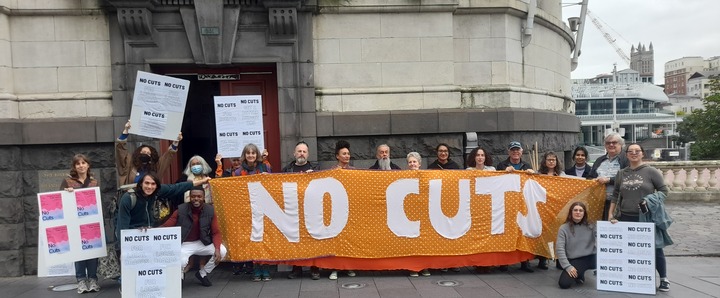 Wayne Brown: Don't Cut Community Services!NO CUTS Wayne Brown’s Budget 2023/24 is proposing to cut funding to crucial community support services during a cost of living and climate crisis. The people of Auckland are deeply concerned about the proposed budget. We understand that the Council is facing financial challenges, but we urge Auckland Council to reconsider these cuts as they will have a severe impact on the community. “Cutting regional community focused initiatives … of all groups working with Māori, Pasifika, youth, refugee, new migrant and rainbow communities.” - Page 30, Te Wāhanga Tuatoru: Te Pūtea e Marohitia Ana, Annual Budget Proposal 2022/23. We can see the budget has targeted marginalized communities, yet does not suggest cuts to industry and business whatsoever. The proposed budget cuts will have far-reaching consequences for all Aucklanders, but especially our most vulnerable residents, including children, the elderly, the working poor, and those with disabilities. Cuts to climate change, social services, community venues, public transport, arts,and education will have a devastating impact on these communities, and protesters are determined to make their voices heard. The proposed cuts to community services, including libraries, community venues and centers, youth and homelessness, early childhood education, Arts and culture, water quality and public transport, will have a negative impact on the quality of life for many Auckland residents. These services are essential for the well-being of our community and provide opportunities for social interaction, education, and access to essential resources. Furthermore, the proposed cuts to environmental initiatives, including park maintenance and waste management, will have a detrimental effect on our environment. These initiatives are critical to the sustainability of our city and the protection of our natural environment and resources. We understand that difficult decisions must be made regarding the budget, but we urge the Council to prioritize the needs of the most vulnerable. We believe that alternative solutions and a better budget is possible. The Auckland council’s feedback report suggested that the majority of Aucklanders reject this proposed budget, and it is not suited to serve Auckland residents. The sale of the airport shares is not necessary or helpful and will take Auckland backwards. The airport shares are an important revenue stream, the airport is increasing in value, and it is an asset that the Council can borrow against. The 18% shareholding is also an opportunity for public voice on the future of the airport, a strategic asset - and it is important that the Council holds onto public control in the face of climate and health emergencies. The Community Coalition against the Cuts demands that Auckland Council, Mayor and Councilors listen to Aucklanders. Consider and implement the voices of Aucklanders who took their time to give their feedback. We fully reject this proposed budget, and we demand the following: 1- NO CUTS TO REGIONAL & COMMUNITY SERVICES 2- INCREASE RATES & DEBT 3- NO SALE OF AIRPORT SHARES The super-rich must pay for this budget deficit, not the most vulnerable. We demand that any shortfall in the Council's books should be filled through increased rates on big business, and charges on luxury items such as private helicopters and super-yachts, not cuts which hit the poorest hardest. We need to be expanding services, not cutting them. We demand that the Council expands public transport, making buses and trains free and frequent, and takes more action on climate change amidst a climate crisis. We demand more funding to tackle poverty and homelessness. Therefore, we call on Auckland Council to reconsider the proposed budget cuts and to find alternative solutions that do not compromise the well-being of our community and our environment. We fully reject this budget we will not sit by quietly. We say, NO CUTS! Community Coalition Against Cuts256 of 300 SignaturesCreated by Community Coalition Against Cuts
-
%20(1).jpg) Protect the Right to Life with Dignity of the Banaban CommunityAs a colonial power, New Zealand exploited Pacific Islands including Banaba, part of modern-day Kiribati, where 90% of the island’s surface was mined by the British Phosphate Commission – jointly owned by the British, Australian, and New Zealand governments – from the early 1900s to the end of the 1970s. This extractive practice left behind barren and uninhabitable land, resulting in the forced resettlement of Banabans to Rabi island in Fiji in 1945. To this day, Banabans on Rabi face discrimination as a nation of people falling between jurisdictions with none wanting to take responsibility.539 of 600 SignaturesCreated by ICAAD (Intl Center for Advocates Against Discrimination)
Protect the Right to Life with Dignity of the Banaban CommunityAs a colonial power, New Zealand exploited Pacific Islands including Banaba, part of modern-day Kiribati, where 90% of the island’s surface was mined by the British Phosphate Commission – jointly owned by the British, Australian, and New Zealand governments – from the early 1900s to the end of the 1970s. This extractive practice left behind barren and uninhabitable land, resulting in the forced resettlement of Banabans to Rabi island in Fiji in 1945. To this day, Banabans on Rabi face discrimination as a nation of people falling between jurisdictions with none wanting to take responsibility.539 of 600 SignaturesCreated by ICAAD (Intl Center for Advocates Against Discrimination)
-
 Recognise Palestinian StatehoodRecognition of Palestinian statehood is essential for NZ to stand up for the rights of Palestinians, including their fundamental right to self-determination. Recognition of statehood is the foundation for full participation in international relations. Without recognition of statehood a territory and its people are vulnerable to serious infringements of their political, economic and wider human rights. While the government of Aotearoa New Zealand states that it supports a two-state solution to the situation in Palestine/Israel, it recognises the state of Israel, but it does not recognise the state of Palestine. The failure to recognise Palestine as a state is inconsistent with NZ's position on a two-state solution, denies the Palestinian people’s right to self-determination and undermines our reputation as a defender of human rights and international law. The situation for Palestinians living under the illegal Israeli occupation is becoming increasingly intolerable. During 2022, 231 Palestinians were killed by the Israeli state and settler violence and in the first month of 2023 alone 42 Palestinians were killed. Numerous major international human rights organisations have reported that Israel is an apartheid regime, including Amnesty International, Human Rights Watch, B’tselem, and the former UN Special Rapporteur on the situation of human rights in the occupied Palestinian Territories [1]. The International Convention on the Suppression and Punishment of the Crime of Apartheid defines “apartheid”, the systematic oppression of one racial group of persons over another, as a crime against humanity. Daily life for Palestinians living under the Israeli apartheid regime is unbearable and inhumane. Just like ordinary New Zealanders were not prepared to stand by in silence while the South African government maintained an apartheid regime, we will not be silent while Palestinians suffer under similar indignities. Recognising the State of Palestine is an essential step towards justice and peace between Israel and Palestine. The Special Rapporteur described “the recognition of the Palestinian people’s fundamental right to determine their political, social and economic status and develop as a people, free from foreign occupation, rule and exploitation.” as the “ critical issue” in addressing the situation in Palestine. [2] We call on the New Zealand government to join the majority of the 193 UN member states and recognise the state of Palestine. References: [1] Amnesty International report: https://www.amnesty.org/en/latest/campaigns/2022/02/israels-system-of-apartheid/#:~:text=This%20is%20apartheid.,order%20to%20benefit%20Jewish%20Israelis; Human Rights Watch report: https://www.hrw.org/report/2021/04/27/threshold-crossed/israeli-authorities-and-crimes-apartheid-and-persecution; B'tselem report: https://www.btselem.org/publications/fulltext/202101_this_is_apartheid; and Special Rapporteur report: https://documents-dds-ny.un.org/doc/UNDOC/GEN/G22/448/72/PDF/G2244872.pdf?OpenElement [2] UN General Assembly Report of the Special Rapporteur on the situation of human rights in the Palestinian territories occupied since 1967, Francesca Albanese (A/77/356) (21 September 2022), at para 11. Available at: https://www.un.org/unispal/wp-content/uploads/2022/10/A.77.356_210922.pdf3,642 of 4,000 Signatures
 -
.png) Make Tertiary Education Free and AccessibleWHY A DEBT FREE FUTURE? Fulfilling these asks and a Debt Free Future is possible, in fact we’ve achieved it before – because education is a public good. Our country has a rich history of free tertiary education, for 121 years, until it was taken away in 1990. After lobbying from students and supporters across the motu, in 2017 we secured a promise of 3 years Fees Free from the Labour Party; but in 2020 the Government broke its promise to extend the policy and took this opportunity, this right, from learners. HOW CAN YOU HELP? We have the power to bring free and accessible education back, and we need your support. Sign and share this petition to be part of the movement fighting for a Debt Free Future. This is about people, community and doing what’s right.1,594 of 2,000 SignaturesCreated by VUWSA President
Make Tertiary Education Free and AccessibleWHY A DEBT FREE FUTURE? Fulfilling these asks and a Debt Free Future is possible, in fact we’ve achieved it before – because education is a public good. Our country has a rich history of free tertiary education, for 121 years, until it was taken away in 1990. After lobbying from students and supporters across the motu, in 2017 we secured a promise of 3 years Fees Free from the Labour Party; but in 2020 the Government broke its promise to extend the policy and took this opportunity, this right, from learners. HOW CAN YOU HELP? We have the power to bring free and accessible education back, and we need your support. Sign and share this petition to be part of the movement fighting for a Debt Free Future. This is about people, community and doing what’s right.1,594 of 2,000 SignaturesCreated by VUWSA President -
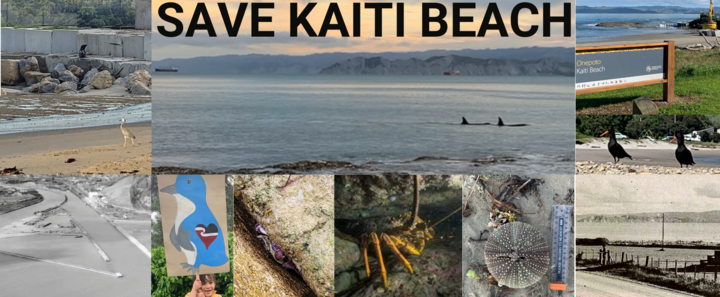 Save Kaiti Beach; PROTECT our History and BiodiversityEastland Port is planning to carry out substantial construction work to expand their port in Tūranga-nui-a-Kiwa Gisborne. This includes further reclamation of reef and ocean space near the river mouth and more dredging with disposal of materials to the off shore disposal ground located within the bay.(1) These proposed works would create further loss of habitat for taonga species, fail to respect significant cultural values and will distort a precious historical site of Aotearoa New Zealand. The species currently occupying this area are Kororā (little blue penguin), Toreā (oystercatcher), Taranui (caspian tern), Matuku Moana (white faced heron), Kāruhiruhi (pied shag), Kawaupaka (little shag), Tākapu (gannet), Karoro (black backed gull), Kōtare (kingfisher), Kekeno (fur seal), Whai (stingray), Kōura (crayfish), Kākahi (fresh water mussel), Pāpaka nui (purple rock crab), Kina (sea urchin), Manaia (seahorse) to name a few. Orca whales also feed from the reef with their young at certain times of the year. Previous construction work by Eastland Port destroyed an estimated 35 to 70 kororā (little blue penguin) nests during the breeding season in 2021. The habitat was located within the rock wall where the port carried out demolition and reclamation.(2) The consent granted to Eastland Port was a Limited notification which didn't allow for Public Submissions. The site of the proposed works is described as nationally and internationally significant to our country. A natural reef formation used by ancestors of Māori as a landing point dating back many centuries ago. The landing entrance later saw an arrival of Europeans. Kaiti Beach represents a significant historical site used by both our Māori and Pākehā ancestors. In the words of Dame Anne Salmond: “The foreshore of the Tūranaganui River is one of the world’s great voyaging sites. It is the landing place of the Horouta canoe, celebrating the achievements of the Polynesian star navigators. It is the place where Captain James Cook and his companions first came ashore in New Zealand, heralding the traditions of European exploration and discovery. It is the site where Tupaia, the Ra’iatean high priest navigator who sailed with Cook, first met Māori, marking the links between local people and their ancestral homelands. It is a meeting place of cultures, of challenges and shootings, as well as friendly exchanges. Here Captain Cook and a local man saluted each other with a hongi on Te Toka-a-Taiau, the first greeting between a Māori and a European. It is a sacred site for all New Zealanders, to be celebrated with pride and treated with dignity."(3) In the words of Sir Derek Lardelli: Te Toka-a-Taiau, the rock of Taiau, Te Pito o Te Ao, is the core of our universe, a Tairawhiti perspective Ko Te Toka-a-Taiau, Te herenga o ngā wai mai te hononga o ngā rua Te Toka-a-Taiau is the spiritual gathering place of our ancestors Ko Te Toka-a-Taiau, Te whakatinanatanga o te whakapapa We are the kaitiaki guardians of this very sacred site and Te Toka-a-Taiau is the physical reminder of our commitment to the land, the people and our environment Ko Te Toka-a-Taiau he mauri tipua Te Toka-a-Taiau is the spiritual essence of our ancestors Ko te Toka-a-Taiau he mauri tawhito Te Toka-a-Taiau is a spiritual essence from ancient times He mauri no te kukunetanga mai i Hawaiki The spiritual essence from the origins of time and the spiritual homeland of Hawaiki Mauritū nei hei ahurewa tapu That stands as a sacred alter Mauritū nei hei tūāhu tapu That stands as the launching pad of our destiny"(3) We believe all people of Aotearoa New Zealand would consider this a significant piece of history and we need to protect the area from further disruption and modification. We ask you to join us in saying “Enough!” to Eastland Port and Gisborne District Council. Join us in calling for the protection of this natural environment, a life source, a habitat of taonga species, a significant piece of history connecting each of us to our identity. We must protect it for future generations so they can connect to their history. This is our chance Aotearoa New Zealand, let's stand together, side by side to give this area the respect and dignity it deserves. Let it be your time in history to help shape this moment and move us all forward in an ethical direction to let the healing begin. Thank you for your time and consideration in signing this petition. This petition will be used as evidence for public support to deny the consent application submitted by Eastland Port. References: 1. https://www.gdc.govt.nz/consents-and-licenses/notified-consents/notified-consents/Eastland-port-limited 2. Recommendations for penguin management for the Waikahua seawall project at Eastland Port (December 2021). Dr. John Cockrem. https://www.gisborneherald.co.nz/frontpage-featured/20211223/seawall-deadly-for-korora/ 3. The Tūranganui River; A Brief History (October 2006). Michael Spedding. Articles: https://www.stuff.co.nz/national/126798579/little-penguins-left-dead-injured-and-homeless-after-seawall-rebuild-in-gisborne https://www.gisborneherald.co.nz/frontpage-featured/20211022/penguin-alert-locals-urged-to-keep-an-eye-out-after-korora-little-blue-pen/ https://www.gisborneherald.co.nz/local-news/20211027/call-hotline-first-regarding-wildlife-concerns-or-findings-department-of-c/ https://www.gisborneherald.co.nz/local-news/20211028/port-stops-work-pending-search-for-penguin-nests/ https://www.gisborneherald.co.nz/frontpage-featured/20211202/rallying-for-korora/ https://www.gisborneherald.co.nz/frontpage-featured/20211223/seawall-deadly-for-korora/ https://www.gisborneherald.co.nz/frontpage-featured/20220108/penguin-safety-fears/ https://www.gisborneherald.co.nz/frontpage-featured/local-news/editors-pick/20220603/taking-care-of-penguin-business/176 of 200 SignaturesCreated by Waikahua Kororā Kohanga Group .
-
 Call on the Egyptian Government to end the death penaltyIn 2011, a civilian led movement held protests which resulted in the country’s long standing dictator President Hosni Mubarak resigning, and inspiring pro-equality and democracy movements around the world. But democracy was short-lived. On July 3, 2013, a military coup ousted the democratically elected President. Since 2014, the person who led the military coup, who was the Minister of Defense at the time, Abdel Fattah Al-Sisi, has been the president of Egypt. Under President Sisi, people who have spoken out against his authoritarian government regime, including peaceful protestors and human rights advocates, have been arrested, executed and forced into exile. Mass trials of political opponents and reports of confessions forced under torture have become common place.(1,2,3) A 2021 stocktake of the situation in Egypt by Amnesty International found that human rights are severely repressed in the country. “Thousands of people, including human rights defenders, journalists, students, opposition politicians, business owners and peaceful protesters, remained arbitrarily detained. Dozens were convicted after grossly unfair trials or were tried by emergency courts on charges stemming from the peaceful exercise of their human rights. Enforced disappearances and torture continued unabated.” In October and November 2020, official reports are that 57 people were executed, although a pro-government media outlet reported 91 executions, citing anonymous official sources, over the same period. Egyptian authorities do not inform families or lawyers in advance of executions and people often die whilst in custody as a result of cruel conditions including lack of access to medical care.(3) Since 2013, hundreds of people have been killed in the streets, and the peaceful sit-ins that rejected the brutal coup were dispersed, resulting in massacres of civilians, the most famous of which were the Rabaa massacre and Al-Nahda massacre. (4) Climate justice requires an inclusive approach to environmental policy that embeds human rights and tackles system problems, including social injustice, ecological destruction, corruption, and social and economic inequality. COP27 cannot deliver climate justice while ignoring the Egyptian Government’s human rights abuses. Around the world in the lead up to COP27, people are taking action to call on their governments to use their diplomatic influence to join international efforts to push the Egyptian Government to end the death penalty and release the thousands of people who remain arbitrarily imprisoned.503 of 600 SignaturesCreated by Gasser Taher and Asmaa Shokr
-
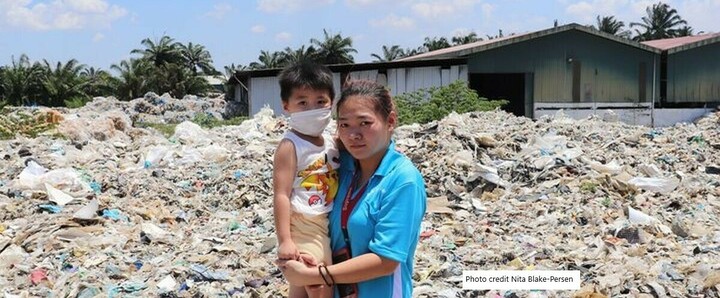 OPEN LETTER: Stop sending our plastic waste to developing countriesNew Zealand has exported over 98,000 tonnes (and counting) of plastic waste offshore since the beginning of 2018. More than 46,000 tonnes of this has been shipped to Malaysia and Thailand. In the case of Malaysia, the plastics are imported from New Zealand and illegally burned next to schools and homes, causing a health and environmental epidemic. Cancer and asthma cases have increased. Microplastics leach into the waterways. The air is polluted with burnt plastic and ecosystems have been destroyed. The Ministry for the Environment has just published a consultation document on New Zealand's waste management strategy, "Te kawe i te haepapa para - Taking responsibility for our waste". Disappointingly, the consultation document does not “take responsibility” because it completely ignores the fact that our plastic waste exports are not being recycled by the receiving countries and the repercussions of this. The plastic waste is able to be exported because of a major loophole in the law: our kerbside recyclables and industrial plastics are not sufficiently regulated under the Imports and Exports (Restrictions) Prohibition Order (No 2) 2004 because they are considered “easily recyclable”. Section 11 of the Order requires a permit to be issued by the Environmental Protection Authority for hazardous plastics. Polyethylene (PE), polypropylene (PP), and polyethylene terephthalate (PET) recyclables are exempt from this law (under Part 2A of Schedule 3) and therefore are assumed to be “disposed of or managed in an environmentally sound and efficient manner in the importing State." Just because something is deemed to be “easily recyclable” does not mean that it is guaranteed to be recycled at the receiving country. We therefore call on the New Zealand government to immediately ban all plastic waste exports by December 2022 which is the last month that Parliament will sit in that year. New Zealand authorities still operate under the assumption that, as long as our plastic exports are easily recyclable, shipping them overseas is a satisfactory solution to our waste problem. In reality, New Zealand is shipping its emissions to developing countries. Some may say that the issue lies with Malaysian authorities not enforcing its own laws to stop the open burning of plastic waste. We reject this argument. The issue lies with New Zealand turning a blind eye to the reality on the ground. We are just as culpable when we knowingly export our waste to countries with poor resources, capacity and capability for effective monitoring, reporting, compliance, and enforcement and weak environmental and human rights protections. This is also a human rights issue and our moral obligation to Malaysia (and other developing countries) and its people should be paramount. We want the New Zealand government to invest urgently in systems and infrastructure that will reduce our reliance on plastic. It is not enough to tweak our regulations on the way our waste is exported, as the bigger problem lies with our overconsumption, poor import restrictions on toxic and single use plastics, and resins that cannot be recycled domestically. New Zealand is drowning in plastic and we cannot manage that amount responsibly, here or offshore. We need to turn off the tap and the government must establish policies and invest in systems and infrastructure that empower people to dramatically reduce their plastics consumption . We must reduce the range of plastics we import into New Zealand to those deemed non-hazardous by the Basel Convention: PE, PP and PET type plastics. We want the government to invest in companies that enable consumers to refill and reuse, rather than investing in a plastic innovation fund that will only preserve our plastic addiction (bioplastics, for example, are not necessarily good for the environment). We need the government to make plastic-producing companies responsible for their product’s lifecycle. New Zealand is embarrassingly behind other OECD countries in requiring companies to implement product stewardship schemes to address the problem at the source. We strongly urge the government to establish import controls and product stewardship laws. Use the regulatory tools we already have to streamline the type and amount of plastics that we do use to fit with our onshore recycling capacity. We also demand greater transparency and accountability from recycling and waste management companies to ensure that all post-consumer plastics are safely and domestically managed without any leakage to the environment. Even so, none of these measures will amount to much if we continue to send our waste overseas to vulnerable countries. We call on the Prime Minister to ensure that the waste management strategy is as transformative as its title suggests - that we are "taking responsibility for our waste" and not polluting other countries. To do this, we must immediately ban the export of plastic waste while transitioning to a safer circular economy in which plastics are minimalised. The government has boldly banned single-use plastic bags and microbeads, so it is no stranger to making bold decisions for the greater environmental and social good. Signed, Lydia Chai Pua Lay Peng Niamh Peren (Founder of Tino Pai Aotearoa / Thumbs Up New Zealand) Dr Trisia Farrelly (Political Ecology Research Centre, Massey University) Liam Prince (Aotearoa Plastic Pollution Alliance) Manawatū Food Action Network The ReCreators Sustainable Strategy Ltd Resilient Russell Charitable Trust Nonstop Solutions Carbon Neutral Waiheke Vision Kerikeri Federation of Women's Health Councils Aotearoa NZ Nuclear Free Peacemakers Network Waitangi Otautahi Inc 350 Otautahi Christchurch [Full list of organisations here: https://docs.google.com/document/d/18CppQ1cB2f3bV63xQxj6TWMK9bcLDq7Triwgb-EVpaw/edit?usp=drivesdk]11,827 of 15,000 SignaturesCreated by Lydia Chai
-
 Urgently stop National Library from sending thousands of books to the PhilippinesThis petition was closed Nov 1st and presented to the House of Representatives Nov 22 More info on the Parliament-site https://www.parliament.nz/en/pb/petitions/document/PET_116636/petition-of-sandra-bianciardi-urgently-stop-national-library Because the parliamentary submission (presented on January 20th) appears to have stalled, we have decided to take the unusual step of publishing our submission. You may download the submission here: http://alpha.books.online.fr/Submission-20-1-2023.pdf December 2021, Rachel Esson announced the suspension of disposals, and we learned later on in February through the Dominion and Stuff that "consultations" were to happen with the "stakeholders". But in reality nothing has happened over the last 6 months: eventually in July this year, Rachel Esson, clearly confirmed to an OIA inquiry that the agreement with Internet Archive has NOT been cancelled or modified. https://fyi.org.nz/request/19611-internet-archive-agreement-and-update-of-the-list-of-books-to-be-sent-to-the-philippines#incoming-74684 The list of 428,232 books destined to be digitised in the Philippines and leave New Zealand forever, is the same list as it was before Christmas 2021. Nothing allows us to believe that a discussion will openly take place, on the contrary, the National Library's declaration indicates it is going in exactly the opposite direction. Let’s read once more what R. Esson expressed in Stuff: “People care so passionately. But the world’s moved on, and we don’t need to keep these [books],” she says. “It’s not good for New Zealand, and for us, to keep them. And they’re not being used. And they’re available elsewhere. All those arguments. We’ll find a way through, but I’m not sure that we can please everyone.” (Stuff, https://www.stuff.co.nz/entertainment/books/127618485/help-us-the-national-librarys-unsolvable-dilemma) Therefore, this petition is still as relevant as it was in its first days when it was launched by writers gathering at St Peter's Willis St, in DomStuff Nov 11, 2021. The voices heard at the event were very clear : https://www.stuff.co.nz/national/126965961/authors-gather-for-literary-protest-against-national-librarys-internet-archive-deal or check out Karyn Hay’s LATELY for a live cross just after the event https://www.rnz.co.nz/national/programmes/lately/audio/2018820187/authors-protest-national-library-book-disposal-in-wellington Here’s what you can do: Have a look and share your ideas on the facebook page "Writers Against National Library Disposals" https://www.facebook.com/groups/nodisposals Take a look at the list. Just scroll down to (or seek using Find) "Download the list of books": https://natlib.govt.nz/about-us/strategy-and-policy/collections-policy/overseas-published-collection-management the very identity and function of a National Library is called into question by its donation of the books to an overseas organisation, with no hope of ever recovering them. Therefore this petition not only asks for the Internet-Archive agreement to be cancelled, but also for public consultation about the future of the National Library of New Zealand, a library where professional librarians will be able to fill the collection with any books of the world they judge pertinent to New Zealand researchers and the public. "Who is Responsible" https://nodisposals.neocities.org/html/Who-Is-Responsible.html https://nodisposals.neocities.org/html/Situation-end-2021.html What has happened: Two years ago the National Library announced a plan to rid itself of most of its Overseas Published Collection. These books are national assets and should be treated this way. They contain a wealth of knowledge we do not want to lose. They will be costly to replace, and some will not be able to be replaced. Researchers, writers and students use this collection regularly. ▪︎ Over 600 000 books were initially slated for "secure destruction " by the National Library. ▪︎ The National Library's own statistics show these books are used about as much as any other part of the National Library's collection. ▪︎ 57 000 of the books were sent to a massive book sale at Trentham earlier this year. Approximately 10 000 sold. ▪︎ The National Library has entered into a contract to gift 428 000 books to an American company, Internet Archive, in return for digitising the books. The books will never come back again ▪︎ Internet Archive is facing a major lawsuit alleging breach of copyright in the USA and is opposed by writers and publishers groups nationally and internationally The National Library's rationale for getting rid of the books has shifted over time. ▪︎ It started as a cost saving exercise so it did not have to pay for storing them. "Secure destruction " was its original plan. Publishers figures for 2019 showed 2662 books were published in New Zealand. It would take 150 years to fill the space left by getting rid of the Overseas Published Collection. Extract from Scoop. 29 Oct "All the hard work of thoughtful librarians, their acquisitions and curation over the past century (and more), will be undone. The National Library is descended from the General Assembly Library, founded in 1862. (...) The books are part of our tradition. They are special items, not worthless, ageing assets – and their value is increasing with time. All attempts to persuade our politicians (...) have failed until now. These politicians, through the library’s directors, are effectively ‘legislating’ (in the philosophical sense) against our books. Public outcry is now our recourse." William Direen https://wellington.scoop.co.nz/?p=140249&fbclid=IwAR1tsZqoZ9uxsOyUS_acm17hmVrSgCJYMkcHqEUIDyMpiB263ZVJh5nNVRE We ask that ▪︎The contract with Internet Archive be cancelled Parliament must ensure that the National Library carries out its job in a careful, prudent way as envisaged by those who drafted the legislation it currently operates under.1,025 of 2,000 SignaturesCreated by Sandra Bianciardi