-
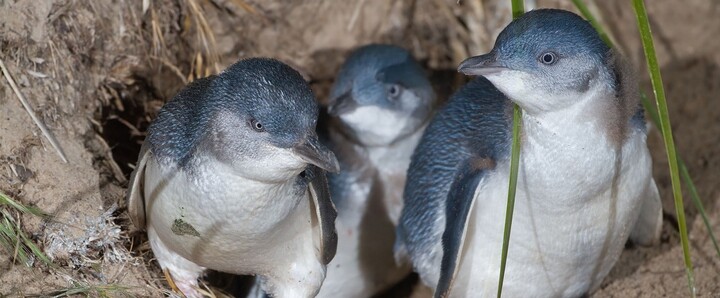 Protect Timaru's PenguinsThere is an abundance of dedicated spaces for dogs to exercise in the Timaru district (http://bit.ly/2z3PD4N). The little blue penguins (kororā) that nest at Caroline Bay, however, do not have such luxuries. We are exceptionally lucky to have a breeding colony of endangered penguins (kororā) so close to our town centre. After a short drive or walk, we can watch them come ashore — undeterred by traffic and noise from the port just metres away. Research shows that dogs pose the biggest threat to little blue penguins (kororā) across New Zealand (http://bit.ly/2z0ou2n). They are vulnerable when they walk from their nests to the ocean in the morning before the sun rises, and again when they come in to feed their chicks at night. During the day, chicks are left behind in the burrows where they are vulnerable to dogs, which follow their natural instincts to sniff out the strong smelling birds. In summer when this change would take effect, the earliest sunrise is 5:44am and the latest is 7:50am. If Timaru District Council allows dogs on the beach during the proposed times of 5am - 9am (as announced by Councillor Sally Parker on her Facebook page) this allows a full 2 hours and 50 minutes during which there is an increased chance that a penguin could be attacked or killed by a dog being walked on the beach. August through until March are the most important months for little blue penguins (kororā) to mate, lay their eggs, raise their chicks, and come ashore to moult. The loss of one or both parents means the chick will not survive, so protecting them during the full breeding season is critical. Even if you’re cynical about the intrinsic value of nature, the penguins are an increasingly important part of our local economy. Compared with other towns in the region, Timaru has relatively few tourist attractions. We know the penguins can have up to 100 visitors in a night. Some people visit specifically to see them and contribute significantly to the local economy by staying in hotels, eating out, and contributing to local businesses. You only need to look at Oamaru’s success to see their potential to open a new avenue for tourism in the region. If you have not done so recently, we strongly encourage you to visit Caroline Bay one evening to watch the penguins come in. You will see how special these birds are and quickly learn that people from Timaru and beyond are exceptionally proud to have them breeding in the bay.1,402 of 2,000 SignaturesCreated by Kimberley Collins
-
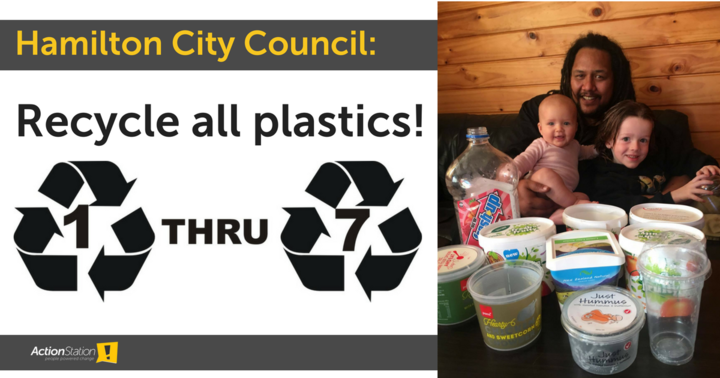.png) Recycle All Plastic HCCWe want to protect the whenua and make the most of the resources that we have. All plastics are given numbers by the companies that create them. Currently, only plastics 1 and 2 are collected at kerbside in Hamilton. We don't like sending our yogurt pots and other similar plastics to landfill. We would like plastics 1-7 to be collected at kerbside for recycling. There are so many awesome products that this plastic can be used for, including carpet and outdoor furniture. There are tons of benefits to recycling plastic. It stops the need for as much new plastic production, it stops plastics from ending up in our environment, especially the marine environment, and it stops plastics from being put in landfill where they last for a very long time causing environmental damage. Hamilton City Council's current recycling contract commenced in 2002 and there were limited options for recycling more than plastics 1s and 2s. This contract is now up for review, which is why this is the time to call for these changes. Auckland and Christchurch Councils recycle Plastics 1-7, so we think Hamilton City can too!! Under the current service, 27 per cent our city’s household rubbish is recycled; the remaining 73 per cent goes to landfill. We don't think this is good enough and we would like to be able to do more to protect our environment. Please extend the recycling of plastics in our city.1,092 of 2,000 SignaturesCreated by Troy & Hemi May Kelly
Recycle All Plastic HCCWe want to protect the whenua and make the most of the resources that we have. All plastics are given numbers by the companies that create them. Currently, only plastics 1 and 2 are collected at kerbside in Hamilton. We don't like sending our yogurt pots and other similar plastics to landfill. We would like plastics 1-7 to be collected at kerbside for recycling. There are so many awesome products that this plastic can be used for, including carpet and outdoor furniture. There are tons of benefits to recycling plastic. It stops the need for as much new plastic production, it stops plastics from ending up in our environment, especially the marine environment, and it stops plastics from being put in landfill where they last for a very long time causing environmental damage. Hamilton City Council's current recycling contract commenced in 2002 and there were limited options for recycling more than plastics 1s and 2s. This contract is now up for review, which is why this is the time to call for these changes. Auckland and Christchurch Councils recycle Plastics 1-7, so we think Hamilton City can too!! Under the current service, 27 per cent our city’s household rubbish is recycled; the remaining 73 per cent goes to landfill. We don't think this is good enough and we would like to be able to do more to protect our environment. Please extend the recycling of plastics in our city.1,092 of 2,000 SignaturesCreated by Troy & Hemi May Kelly
-
 Ask Countdown NZ: Ban The BagWoolworths Australia Countdown NZ's parent company is banning single-use plastic bags. [1] New Zealanders use around 1.6 billion single-use plastic bags every year. Plastic bags often end up in our rivers, lakes, beaches and oceans. Plastic bags in the ocean are a huge hazard to marine life. The bags can be swallowed, wrapped around the necks or fins of marine animals. They can be mistaken for food and generally don't belong in the ocean.[2,3] It has recently been revealed plastics were being eaten by the majority of New Zealand fish, and that a third of turtles and seabirds that washed up dead on Kiwi beaches had eaten plastic.[4] There is strong support from local government, the retail sector, and everyday Kiwis to do something.[4] Countdown listened to the Waiheke Island community. It is both plastic bag free and encourages the use of biodegradables.[5] Doesn't the rest of NZ deserve the same? By 2050 there will be more plastic than fish on the ocean. Not using plastic bags is an easy thing for us to do that would make a big difference. We need to Ban The Bag before its too late. Please help! Please take action! Countdown Waiheke Island did it, sign and share the petition asking Countdown NZ to ban the bag. Comment on their facebook page https://www.facebook.com/countdown/ Tweet @CountdownNZ #CountdownBanTheBag #BanTheBag Phone the Countdown Customer Care Centre: 0800 40 40 40 email: [email protected] Spread the word however you can #CountdownBanTheBag #BanTheBag 1 - Australian supermarket giant Woolworths to ban plastic bags within 12 months, 14 July 2017 https://www.stuff.co.nz/business/world/94756897/australian-supermarket-giant-woolworths-to-ban-plastic-bags-within-12-months 2 - Drowning our marine life in a growing sea of plastic, 27 Mar 2017 http://www.nzherald.co.nz/nz/news/article.cfm?c_id=1&objectid=11825914 3 - More than 9 billion tonnes of plastic has been produced since 1950, and the vast majority of it is still around, 20 July 2017 https://www.stuff.co.nz/business/better-business/94924204/Theres-literally-a-tonne-of-plastic-garbage-for-every-person-in-the-world 4 - Plastics were being eaten by the majority of New Zealand fish, 27 July 2017 http://www.stuff.co.nz/national/95119319/17800signaturestrong-petition-calling-for-a-plastic-bag-levy-presented-at-parliament 5 - Countdown Waiheke Island did it, 27 July 2016 http://www.stuff.co.nz/business/industries/82435349/after-15-years-the-wait-is-over-for-new-countdown-waiheke 24 May 2016 http://www.scoop.co.nz/stories/AK1605/S00726/countdown-waiheke-is-now-plastic-shopping-bag-free.htm596 of 600 SignaturesCreated by Tim Pate
 -
 Establish an Independent Commission for WaterWater - our lifeblood, a taonga and precious resource. We, and most other life forms on this planet cannot survive without it. In Aotearoa/New Zealand we are fortunate to have a relatively abundant supply and in some places, our water is of unsurpassed quality. But our guardianship of this treasure feels both negligent and negligible. In fact, there is clear evidence that many of our fresh water systems are suffering and our current water use is unsustainable. We have issues surrounding; access, pollution, “swimmable” rivers, the impact of agriculture and irrigation, loss of wetlands and their fauna, privatisation and selling our water to overseas companies. These issues are complex and interrelated. Resolving them will require focused, well-researched and sustained action. We need commitments and action from all aspects of our society – rural and urban communities, farmers and industries, politicians from all sides of the spectrum, scientists and ecologists, local and national government. We already have the Land and Water Forum (http://www.landandwater.org.nz/). They make well researched and constructive recommendations, but their recommendations are not recognised or implemented by government. We need an independent and well-resourced Waterways Commission. A Commission that can implement and enforce its recommendations, that puts the viability, sustainability and sanctity of our water at it’s centre, and that works with the diverse interests to create a national water strategy that protects, restores and sustainably manages this precious resource. And we need to act now. Please sign up if you agree. - Our fresh water 2017, Ministry for the Environment http://www.mfe.govt.nz/publications/environmental-reporting/our-fresh-water-2017 - New Zealand’s fresh waters: Values, state, trends and human impacts, Professor Sir Peter Gluckman, Chief Science Advisor http://www.pmcsa.org.nz/wp-content/uploads/PMCSA-Freshwater-Report.pdf - Top scientist: Fixing freshwater issues an 'enormous challenge' http://www.stuff.co.nz/environment/91418638/Top-scientist-Fixing-freshwater-issues-an-enormous-challenge - Dame Anne Salmond: NZ can’t ignore water warnings https://www.newsroom.co.nz/@environment/2017/03/26/16845/oecd-call-on-our-waterways-must-be-heeded - Water Fools? http://www.radionz.co.nz/programmes/water-fools - Landmark report finds freshwater at risk http://www.radionz.co.nz/news/national/329582/landmark-report-finds-freshwater-at-risk186 of 200 SignaturesCreated by Hilary Unwin
 -
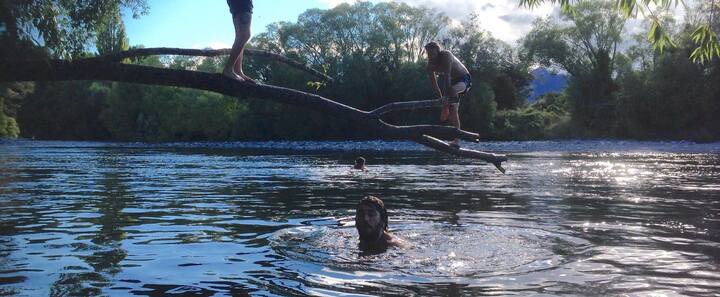 NZ Deserves Honest Swimming StandardsA recently released report from NIWA showed that the Government's proposed swimming standards were worse than those from the 2014 policy. Despite the Government claiming to have a goal of swimmable rivers by 2040, their policy weakened human health standards and only applies to 10% of the whole country's waterways. This won't solve our problems. It will only make them worse. Please use this form to make an official submission to the Ministry for the Environment's National Policy Statement for Freshwater Management. Submissions are open now until 5pm Thursday 25 May. New Zealanders have asked the Government and the Ministry for the Environment again and again for a genuine swimmable bottom line for rivers & lakes. Aotearoa New Zealand has serious problems of freshwater contamination and polluted rivers and lakes. We must take steps to stop this situation from getting worse and to begin to turn this around. The first step is to write strong protection for rivers and lakes into our country's freshwater policy. We can do this now and, in doing so, it will influence the work of local councils, industry and government to improve freshwater management so that rivers and lakes are protected for all New Zealanders. The OECD wrote in its 2017 Environmental Performance Review that New Zealand is reaching environmental limits and that freshwater pollution is one of areas of degradation that threatens the health of our people, our environment and our economy. As Sir Peter Gluckman, the Prime Minister's Chief Science Advisor said in a recent interview on his report on the state of the nation's freshwater, "The reality is we cannot keep going as we have been." He's right and the public is right. We have to change and the first step for improving the health of our rivers and lakes is this freshwater policy. It is the document on which decisions around the country will be made. Let's make it the best and the strongest it can be for the sake of this beautiful country. *The signatures counted here also include the submissions made on https://www.toko.org.nz/petitions/nz-deserves-honest-swimming-standards-1 [1] https://niwa.co.nz/news/niwa-technical-background-report-for-mfe-clean-water-swimmability-proposals-for-rivers [2] http://www.mfe.govt.nz/sites/default/files/microbiological-quality-jun03.pdf1,660 of 2,000 SignaturesCreated by Marnie Prickett
.jpg)
-
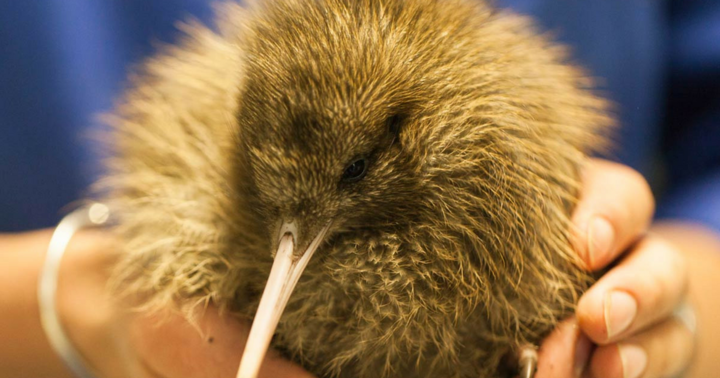 Say no to a pipeline through a Kiwi sanctuary by Mount Aspiring National ParkA company called Okuru Enterprises Ltd, now trading as Alpine Pure has been given the right to take and export 800,000 tonnes of water – about 800 million litres – each month from a water catchment high in the mountains at Mount Aspiring National Park. As part of this arrangement, the company has also been given the right to lay a pipeline to transport the water out to sea to waiting ships through a sanctuary for New Zealand's rarest kiwi, the Haast Tokoeka. There's just over 400 Haast Tokoeka left in Aotearoa. DoC says its status is "Nationally Critical", and 33 of them are believed to live near the pipeline. Our national bird cannot afford for this risk. The use of DoC land costs the company just $5000 year, and the consent which expires in 2027 costs nothing, except for minor administration and processing fees. It'd bad enough we're selling off our water for private profit at next to nothing. It's worse we're willing to put our native kiwi at risk. The resource consent states that Okuru Enterprises must develop a ‘kiwi management plan’, with the objective of “avoiding adverse effects from construction and ongoing activities within conservation land on Haast tokoeka [kiwi] living within a 100ha radius of the proposed pipeline route”. It goes on to state that if kiwi are adversely affected, they will be “removed from the site”. But here’s the thing, ‘If things go wrong, we can just move the kiwi’ is a really bad precedent to set. To make matters worse, the endangered Fiordland Crested Penguin also lives in the pathway of the pipeline at Jackson’s Bay. The proposal to take our water, ship it off shore for what seems like marginal benefit to the local community but with a potentially catastrophic cost to two species that are already at critical risk of extinction looks like a bad one. As we know from our own history, humans tend to underestimate how wrong things can go, and it’s usually our wildlife, trees, rivers, birds and lakes that pay the cost. Please sign the petition and share it with your friends today. Read more: http://m.nzherald.co.nz/nz/news/article.cfm?c_id=1&objectid=11777864 http://www.stuff.co.nz/business/88099749/from-national-park-to-overseas-plan-to-export-billions-of-litres-of-west-coast-water http://www.newshub.co.nz/home/politics/2017/04/company-given-right-to-lay-pipeline-through-kiwi-sanctuary.html18,950 of 20,000 SignaturesCreated by Team ActionStation
-
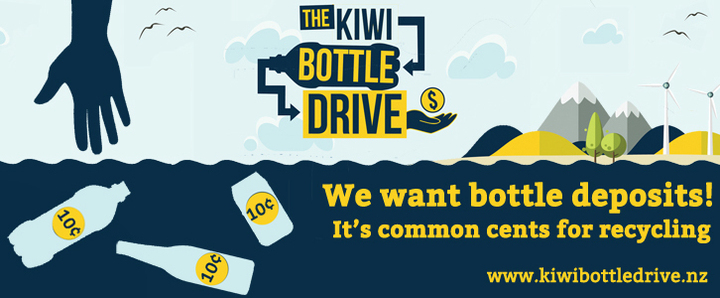 Introduce a bottle deposit scheme!Almost a billion plastic bottles are being landfilled, littered or entering the oceans every year in New Zealand. Our communities and seas are precious so we want to stop this totally avoidable waste and pollution. We can ensure effective recycling and reuse of all drink containers with a bottle deposit scheme. This will help stop the wasteful production of new plastic bottles and allow for existing plastic to be reused instead. Bottle deposits (also known as container deposit schemes) give people a >10c refund on a bottle when they recycle it. This incentive creates a circular economy system that will easily double New Zealand’s recycling rates overnight! [1] We had a system like this in Aotearoa NZ until the 1980’s, and ‘bottle drives’ were popular fundraisers for groups like the Scouts! When plastic bottles were introduced they created a throw away culture and the conditions for our current waste crisis, Bottle deposit schemes are now taking off worldwide as a way to keep plastic out of the environment. It’s definitely time we got in on the game. Australia will have them in all states by the end of 2018 and Germany has achieved a 98% recycling rate on plastic bottles! If we bring in a bottle deposit scheme, before we know it there’ll be less plastic on our beaches, the local kids will be fundraising by collecting bottles, and we’ll have created over 2,000 new jobs! Bottle deposits will massively increase recycling rates and: - Reduce plastic pollution in the sea - Create over 2000 jobs - Save councils and tax payers $26-40 million per year - Reduce CO2 emissions - Fund community groups - Supplement low incomes - Foster a sustainable, circular economy Local councils are committed to introducing bottle deposits and a survey has shown 92% of New Zealanders agreed with them [2]. What are we waiting for? The Ministry can bring in a refundable deposit scheme with a commitment to at least 85% recycling rates, under S2.23 (1)(c-e) of the Waste Minimisation Act 2008. The legislation is in place, now we want it to be put into action! Please sign the petition to tell the government - there's no more time to waste! Bottle deposits are common cents for recycling. This petition is part of The Kiwi Bottle Drive, a broader campaign to get a bottle deposit scheme in NZ - get involved! http://www.kiwibottledrive.nz. ______________ References: 1. Envision; The Incentive to Recycle: A Container Deposit System for New Zealand (2015). https://drive.google.com/file/d/0By5tj62u3HilUzZfSGNGTk5vd1k/view 2. Time to bring back container deposit scheme http://www.stuff.co.nz/nelson-mail/opinion/83793677/time-to-bring-back-container-deposit-scheme15,902 of 20,000 SignaturesCreated by Kiwi Bottle Drive
 -
Radio New Zealand: responsible science/environment coverage please!As taxpayers, we have a right to expect responsible public broadcasting. In today’s ‘post-truth’ environment, it’s more crucial than ever that we are all well-informed about issues that are utterly vital to the future of our mokopuna - particularly resource limitation challenges such as climate disruption. The reality is current COP pledges will result in a catastrophic +2.7oC above pre-industrial levels.(1) A viable future will have to be low-carbon; as a public service broadcaster, RNZ have a duty to make this clear. The changes we request would be consistent with the Government's declaration of a climate emergency. Many media organisations now have dedicated climate pages on their websites, notable local examples being the Stuff and Newsroom websites; internationally, the BBC,(2) Al Jazeera, the Guardian and Independent websites, and the Washington Post have all stepped up. - It’s time that RNZ did the same, and used their programme content to educate audiences about the climate crisis - including coverage of recent and future COP meetings. References: 1. https://phys.org/news/2022-03-options-halt-climate-crisis.html 2. https://variety.com/2021/tv/news/climate-content-pledge-cop26-1235101792/624 of 800 SignaturesCreated by Graham Townsend