-
 Pledge: Make Your Vote Count for PalestineThis year’s General Election provides a crucial opportunity to elect representatives who will take a stand for justice and be accountable to us, the people. Voters can use their power to demonstrate to political parties and candidates that those who enable or excuse Israel’s apartheid regime and genocide and ethnic cleansing of Palestinians will not be elected or re-elected. By signing this pledge, you are committing to make your vote count for Palestine. Together we will vote only for political parties and candidates that are committed to the liberation of Palestine, and will commit the next Government of Aotearoa New Zealand to: • Recognising Palestinian statehood • Sanctioning the occupation for its ongoing genocide and decades-long illegal occupation of Palestine • Creating special visa pathways for Palestinians wanting to come to Aotearoa New Zealand • Divesting public money from companies that uphold Israeli systems of apartheid and illegal settlements It is time for you to take the pledge and make your vote count for Palestine. JOIN A RALLY FOR PALESTINE ON 10 OCTOBER - FIND DETAILS OF THE ACTIONS IN YOUR AREA HERE.1,429 of 2,000 SignaturesCreated by Justice for Palestine
-
 ANZ KiwiSaver divest from illegal Israeli settlements or we switch!Israel is only able to maintain its apartheid regime and to expand its illegal settlements because of material support from the international community, including through unethical investments by global financial institutions (including ASB and other New Zealand banks and funds). Mindful Money’s 2025 research showed that 91% of the New Zealand public want to avoid investments that violate human rights. However,many of our KiwiSaver funds are invested in companies that are involved in Israel’s illegal occupation, meaning that through our retirement savings we are inadvertently helping to finance of Israel’s system of apartheid, the expansion of illegal settlements in the Westbank and East Jerusalem, and the genocide of the people of Gaza. According to research by Mindful Money, KiwiSaver funds' investments supporting Israeli settlements in Palestinian occupied territories almost doubled from March 2024 to March 2025 from $92 million to $179 million. In April 2026, KiwiSaver investments in Motorola Solutions alone totalled $61 million. . What can you do about it? With the ASB KiwiSaver win we’ve shown that people power works! We need to keep the pressure on our KiwiSaver providers to divest from Israeli apartheid. It’s time to get ANZ to to stop financing Israel’s apartheid, ongoing colonisation and genocide and divest from the illegal settlements. Together we can get them to do the right thing, again! • Are you an ANZ customer? Sign the petition and use your power to demand that ANZ divest - or else you will switch to another provider. But don’t switch yet - while you’re still a customer you have power to pressure ANZ - keep the pressure on till 30 March 2027 when everyone will switch together if they haven’t divested from Motorola. • Not a ANZ customer? Sign the petition and share to help bring others on board to demand action from ANZ. Boycott action works - and is a powerful tool we can use to make big companies realise the cost of doing business with an apartheid state. Why ANZ? Of all of New Zealand’s KiwiSaver funds, ANZ has the most investments in Motorola Solutions Inc. https://www.whoprofits.org//writable/uploads/old/uploads/2018/06/old/bab_al_shams_-_ahmad_al_bazz.jpg Motorola Solutions Inc provides telecommunications, surveillance and military technology to the Israeli military and illegal Israeli settlements - effectively operating as the IDF’s technology arm and enabling the maintenance and expansion of these settlements. The company also provides technology for operating Israel’s checkpoints and separation wall, two key pieces of Israel's apartheid infrastructure.[1] Motorola Solutions Inc. have been included in the UN List businesses involved in activities that help maintain/enable Israeli settlements, which are illegal under international law. [2] ANZ has $18 million invested in Motorola Solutions Inc., making their KiwiSaver fund one of the biggest investors in the occupation in the top 10 KiwiSaver providers. While many KiwiSaver funds are complicit in Israeli crimes, we have identified ANZ as the #1 Most Unethical KiwiSaver for those who care about Palestinian human rights. The International Court of Justice – the world’s highest court – recently declared that states, international organisations, investment corporations and all other institutions must not assist in maintaining the illegal situation created by Israel in the Occupied Palestinian Territories.[3] In April this year the NZ High Court ruled that the NZ Super Fund’s decision to invest in Motorola Solutions (amongst other companies) were unlawful. [4] ANZ is currently complicit in Israel’s violations of human rights and international law through its investments in Motorola Solutions Inc. To avoid being an accomplice to this illegal activity, ANZ must divest from Israeli apartheid. BDS works! In calling on ANZ to divest from Motorola Solutions Inc. we are taking the lead from the Palestinian call for Boycott, Divestment and Sanctions as a form of non-violent pressure on Israel. Both globally and here in Aotearoa, companies are realising that the investments in companies that sustain Israel's apartheid are unethical and are divesting. KiwiSaver providers Simplicity and ASB, Ireland’s sovereign investment fund and French Insurance giant AXA have all divested from services due to their role in illegal settlements. Public pressure works! We won with ASB. We can win with ANZ, and we won’t stop there… ANZ and other New Zealand banks and KiwiSaver providers continue to maintain investments in other companies directly or indirectly involved in the maintenance and extension of the illegal settlements, listed in the UN database. So we are also calling on ANZ and all other New Zealand banks and KiwiSaver providers to adopt policies that prohibit investments in the companies identified by the UN and get rid of any existing investments in these companies. These financial institutions are on notice that we don’t want our money invested in Israel’s discrimination and colonisation. If they continue to bank on apartheid, we’ll stop banking with them! It is more urgent and important than ever that our voices are heard loud and clear by decision-makers and to encourage others to join our growing movement. References: [1] https://www.whoprofits.org/companies/company/3808 [2] OHCHR update of database of all business enterprises involved in the activities detailed in paragraph 96 of the report of the independent international fact finding mission to investigate the implications of the Israeli settlements on the civil, political, economic, social and cultural rights of the Palestinian people throughout the Occupied Palestinian Territory, including East Jerusalem [30 June 2023]. [3] Legal Consequences Arising from the Policies and Practices of Israel in the Occupied Palestinian Territory, including East Jerusalem (Advisory Opinion) [2024]. [4] Nazzal v Guardians of New Zealand Superannuation [2026] NZHC 681, at [7], [97] and [100]. Photo credit: Motorola communication device used by the Israeli Police during the dispersal of a Palestinian demonstration Bab Al Shams, E1 Area | Jan 2013 | Photographed by Ahmad Al-Bazz, Activestills.429 of 500 SignaturesCreated by Don't Bank on Apartheid
 -
.png) Recognise that Economic Abuse is Family ViolenceWe see the impact of economic abuse and family violence in our day-to-day work. We support victim-survivors and try to mitigate the harm caused by people who perpetrate economic abuse. But we often fight losing battles, because New Zealand’s systems allow economic abuse to happen, all too often with no recourse for addressing the harm caused. Economic abuse is a form of family violence that uses coercive, controlling, and threatening behaviour to restrict or remove a person’s financial freedom, autonomy, and security. It is experienced in close personal relationships, particularly intimate partner relationships, and often occurs alongside other family violence behaviours. Research shows that 15% of ever-partnered women have experienced economic abuse. [1] Despite the prevalence of economic abuse, it is rarely recognised and responded to as a form of family violence. Yet the impact can be devastating. Without access to money, victim-survivors lack resources to escape violent partners and remain independent. We estimate it costs around $10,000 to separate from an abusive partner [2]. Even if they can escape, when faced with the threat of poverty, women may choose to stay. When victim-survivors are able to leave, many are forced to carry coerced debt, ruined credit and financial harm long after the relationship ends. This is violence. We need to stop treating it like a hardship or budgeting problem. New Zealand laws and systems that don’t acknowledge and respond to this form of abuse adequately are lagging behind other countries. The United Kingdom and Australia have focused on amending legislation, policies, and processes to better support victim-survivors of economic abuse over the last five to ten years [3]. In contrast, Te Aorerekura and its associated Action Plans to date have no mention of, or response to, economic abuse [4]. Economic abuse is a form of family violence under the Family Violence Act 2018, but this only applies to the granting of a protection order (and ancillary property or furniture order) [5]. Economic abuse is not an isolated issue; it is a long-term driver of gender inequality and intergenerational harm in Aotearoa and needs to be treated as such. Policy recommendations have been developed in close partnership with the National Collective of Independent Women’s Refuges, and are endorsed by around 80 other organisations from across the family violence, financial, and gender equity sectors. For the full list of policy changes recommended, see our website at https://thisisviolence.co.nz References: 1. Economic Abuse by An Intimate Partner and Its Associations with Women’s Socioeconomic Status and Mental Health, by Brooklyn M. Mellar, Janet Lynn Fanslow, Pauline J. Gulliver, and Tracey K. D. McIntosh. Economic Abuse by An Intimate Partner and Its Associations with Women’s Socioeconomic Status and Mental Health - Brooklyn M. Mellar, Janet Lynn Fanslow, Pauline J. Gulliver, Tracey K. D. McIntosh, 2024 2. Financial barriers to exiting abusive relationships, by Good Shepherd NZ Report: Financial barriers to exiting abusive relationships - Good Shepherd NZ 3. For example: Family Violence Flexible Support Packages. Family Violence Flexible Support Packages | vic.gov.au 4. Te Aorerekura Action Plan 2025-2030, Breaking the Cycle of Violence. The Centre for Family Violence and Sexual Violence Prevention. Breaking the Cycle of Violence | The Centre for Family Violence and Sexual Violence Prevention 5. See Family Violence Act 2018, 11(e). Family Violence Act 2018 | New Zealand Legislation802 of 1,000 SignaturesCreated by Brittany Goodwin
Recognise that Economic Abuse is Family ViolenceWe see the impact of economic abuse and family violence in our day-to-day work. We support victim-survivors and try to mitigate the harm caused by people who perpetrate economic abuse. But we often fight losing battles, because New Zealand’s systems allow economic abuse to happen, all too often with no recourse for addressing the harm caused. Economic abuse is a form of family violence that uses coercive, controlling, and threatening behaviour to restrict or remove a person’s financial freedom, autonomy, and security. It is experienced in close personal relationships, particularly intimate partner relationships, and often occurs alongside other family violence behaviours. Research shows that 15% of ever-partnered women have experienced economic abuse. [1] Despite the prevalence of economic abuse, it is rarely recognised and responded to as a form of family violence. Yet the impact can be devastating. Without access to money, victim-survivors lack resources to escape violent partners and remain independent. We estimate it costs around $10,000 to separate from an abusive partner [2]. Even if they can escape, when faced with the threat of poverty, women may choose to stay. When victim-survivors are able to leave, many are forced to carry coerced debt, ruined credit and financial harm long after the relationship ends. This is violence. We need to stop treating it like a hardship or budgeting problem. New Zealand laws and systems that don’t acknowledge and respond to this form of abuse adequately are lagging behind other countries. The United Kingdom and Australia have focused on amending legislation, policies, and processes to better support victim-survivors of economic abuse over the last five to ten years [3]. In contrast, Te Aorerekura and its associated Action Plans to date have no mention of, or response to, economic abuse [4]. Economic abuse is a form of family violence under the Family Violence Act 2018, but this only applies to the granting of a protection order (and ancillary property or furniture order) [5]. Economic abuse is not an isolated issue; it is a long-term driver of gender inequality and intergenerational harm in Aotearoa and needs to be treated as such. Policy recommendations have been developed in close partnership with the National Collective of Independent Women’s Refuges, and are endorsed by around 80 other organisations from across the family violence, financial, and gender equity sectors. For the full list of policy changes recommended, see our website at https://thisisviolence.co.nz References: 1. Economic Abuse by An Intimate Partner and Its Associations with Women’s Socioeconomic Status and Mental Health, by Brooklyn M. Mellar, Janet Lynn Fanslow, Pauline J. Gulliver, and Tracey K. D. McIntosh. Economic Abuse by An Intimate Partner and Its Associations with Women’s Socioeconomic Status and Mental Health - Brooklyn M. Mellar, Janet Lynn Fanslow, Pauline J. Gulliver, Tracey K. D. McIntosh, 2024 2. Financial barriers to exiting abusive relationships, by Good Shepherd NZ Report: Financial barriers to exiting abusive relationships - Good Shepherd NZ 3. For example: Family Violence Flexible Support Packages. Family Violence Flexible Support Packages | vic.gov.au 4. Te Aorerekura Action Plan 2025-2030, Breaking the Cycle of Violence. The Centre for Family Violence and Sexual Violence Prevention. Breaking the Cycle of Violence | The Centre for Family Violence and Sexual Violence Prevention 5. See Family Violence Act 2018, 11(e). Family Violence Act 2018 | New Zealand Legislation802 of 1,000 SignaturesCreated by Brittany Goodwin -
.png) Establish an Independent Commission of Inquiry into New Zealand PoliceThe Public Service Commission’s April 2026 Performance Improvement Review painted a stark picture of a Police force facing an integrity crisis. It identified a culture of “tribalism” among senior leadership, perceptions of a two-tier justice and complaints system, and organisational practices that have failed both staff and the public. The review makes clear that Police leadership must deliver a generational shift in culture by embedding accountability and zero tolerance for misconduct from the front line through to the executive. Without sustained, independent oversight, this review will become another report that sits on the shelf while public trust declines. For almost 20 years, independent reviews have identified the same fundamental issues. From the Bazley Commission review in 2007, to the Public Service Commission’s 2026 review, Police culture has too often placed loyalty above integrity, discouraged staff from speaking up, and failed to hold senior officers to the same standards of those they lead. While some progress has been made, the underlying cultural problems remain unresolved. My own experience reflects many of these systemic concerns: Since lodging an 89-page crime report in January 2021, I have experienced repeated failures of accountability including blocked complaints processes, ignored escalations all the way up to and including the Commissioner, misleading information, and conduct inconsistent with Police’s stated values of empathy, integrity, professionalism and respect. While my case is only one example, it reflects the same systemic failures identified repeatedly by independent reviews over the past two decades. For more information on my appalling Police experience, please visit: https://realnzpolice.com/intro/176 of 200 SignaturesCreated by Andrew Flanagan
Establish an Independent Commission of Inquiry into New Zealand PoliceThe Public Service Commission’s April 2026 Performance Improvement Review painted a stark picture of a Police force facing an integrity crisis. It identified a culture of “tribalism” among senior leadership, perceptions of a two-tier justice and complaints system, and organisational practices that have failed both staff and the public. The review makes clear that Police leadership must deliver a generational shift in culture by embedding accountability and zero tolerance for misconduct from the front line through to the executive. Without sustained, independent oversight, this review will become another report that sits on the shelf while public trust declines. For almost 20 years, independent reviews have identified the same fundamental issues. From the Bazley Commission review in 2007, to the Public Service Commission’s 2026 review, Police culture has too often placed loyalty above integrity, discouraged staff from speaking up, and failed to hold senior officers to the same standards of those they lead. While some progress has been made, the underlying cultural problems remain unresolved. My own experience reflects many of these systemic concerns: Since lodging an 89-page crime report in January 2021, I have experienced repeated failures of accountability including blocked complaints processes, ignored escalations all the way up to and including the Commissioner, misleading information, and conduct inconsistent with Police’s stated values of empathy, integrity, professionalism and respect. While my case is only one example, it reflects the same systemic failures identified repeatedly by independent reviews over the past two decades. For more information on my appalling Police experience, please visit: https://realnzpolice.com/intro/176 of 200 SignaturesCreated by Andrew Flanagan
-
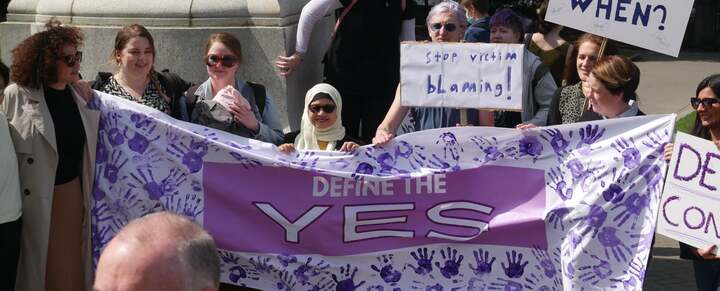 Consent Laws NOWWith three major parties now supporting affirmative consent law reform, Parliament has a genuine opportunity to act before the election. Last week, National announced its support, joining Labour and the Greens in recognising that New Zealand’s consent laws need to change. There is already draft legislation and enough support to progress it. With only limited sitting dates remaining, delaying reform risks treating the safety and dignity of victim-survivors as an election issue, rather than the humanitarian issue it is. We want an Aotearoa where every person, especially our rangatahi, grows up understanding that consent is not silence, uncertainty or the absence of resistance. It is something freely and voluntarily given, actively communicated, and grounded in mutual respect. For too many victim-survivors, sexual violence is not a single moment that simply passes. Its effects can reach into how people feel in their bodies, relationships, schools, workplaces and communities for years afterwards. It can affect mental health, trust, education, whānau relationships and a young person’s understanding of what they are entitled to expect from others. Our laws should reflect the seriousness of that harm and the basic truth that every person has the right to sexual autonomy. New Zealand’s criminal law does not currently contain a positive statutory definition of sexual consent. The Crimes Act identifies some circumstances where consent is absent, but it does not clearly say what consent is. This gap leaves room for outdated and harmful assumptions: that someone must fight back, say “no” in a particular way, or that silence, hesitation, intoxication, a past relationship or simply being there can be treated as agreement. A clear affirmative-consent framework would help shift the focus to communication, mutuality and respect. It would make clear that consent cannot be presumed, while supporting the conversations our young people need to have about healthy relationships, boundaries and care for one another. This reform would not weaken the fundamental protections of the criminal justice system. The prosecution would still have to prove every element of an offence beyond reasonable doubt. It is about ensuring the law is clear, fair and capable of reflecting what we now understand about sexual autonomy and harm. The call for change has been building for years. In 2022, more than 12,000 people signed the Consent Law Reform campaign petition. In 2023, the Justice Committee unanimously recommended that Parliament re-examine the law on consent. Victim-survivors, rangatahi, whānau, advocates, community organisations and legal experts have continued to call for change. This is not a party-political issue. It is about whether Parliament is prepared to put dignity, safety and wellbeing ahead of election politics. No young person, victim-survivor or whānau should have to wait through another election cycle for the law to catch up with what we know about consent, safety and healthy relationships. Parliament has a practical pathway and sufficient support to act. It should do so now. References and supporting information • Justice Committee report on the Petition of Layba Zubair: Review of Sexual Consent Laws • Consent law reform could pass now, says legal expert • National promises stricter rules on sexual consent | RNZ2,871 of 3,000 SignaturesCreated by Consent Law Reform New Zealand
 -
 Stop the Climate Amendment Bill!This is important because climate change is the most serious and important issue facing humankind. We have a rapidly closing window of opportunity to prevent catastrophic damage to the natural world and all human populations. The National Party / ACT / NZ First coalition government has already removed all previously useful emissions reduction laws and policies, leaving us only with the failed ETS scheme. This type of failure is not an option if we are to prevent the extreme weather events we are beginning to experience from escalating in both speed and scale.12,946 of 15,000 SignaturesCreated by Mike Smith
 -
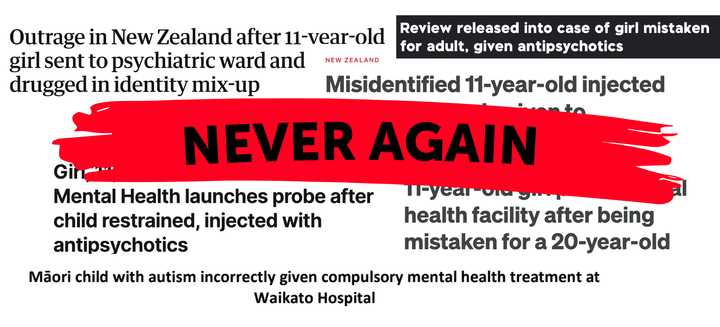.png) Never again: Ensure the wellbeing of children and tāngata whaikahaIn Aotearoa, tāngata whaikaha (disabled people) experience significant inequalities in healthcare access and quality compared to non-disabled individuals across all stages of life [3]. Similar inequalities are seen within policing systems, where tāngata whaikaha face inadequate support and discriminatory practices [4]. In a report by the Health Quality & Safety Commission Te Tāhū Hauora [3], it was found that: • Disabled people die from treatable conditions at five times the rate of non-disabled individuals. • Māori disabled people die from treatable conditions at nearly ten times the rate of non-Māori, non-Pacific, non-disabled individuals. • These inequalities are intensified for people with multiple disabilities and for Māori and Pacific disabled people. • Disability is largely absent from health data, as most major health datasets in Aotearoa do not record disability status. Research from the Donald Beasley Institute regarding policing delivery for tāngata whaikaha [4] found that: • Police in Aotearoa often lack the training to identify and respond to disability (including neurodivergence, psychosocial disability and learning disability). • Disabled people often feel their disclosures of disability are not believed or are ignored by police. • Some disabled people experience escalation of police contact, including use of force due to misinterpretation of disability. • Disabled people may be criminalised for disability-related behaviour instead of receiving appropriate health or disability support. No society should tolerate preventable harm caused by systematic failure. Tāngata whaikaha have a right to be treated with dignity, safety, and respect across all services. References 1. https://www.rnz.co.nz/news/national/547526/11-year-old-put-in-mental-health-facility-given-two-doses-of-antipsychotics-minister-says 2. https://www.rnz.co.nz/news/national/556934/misidentified-11-year-old-injected-with-drugs-rarely-given-to-children-review-finds 3. https://www.hqsc.govt.nz/resources/resource-library/a-window-on-disability/ 4. https://www.donaldbeasley.org.nz/our-projects/understanding-policing-delivery-takata-whaikaha-ddeaf-and-disabled-people775 of 800 SignaturesCreated by On behalf of the whānau
Never again: Ensure the wellbeing of children and tāngata whaikahaIn Aotearoa, tāngata whaikaha (disabled people) experience significant inequalities in healthcare access and quality compared to non-disabled individuals across all stages of life [3]. Similar inequalities are seen within policing systems, where tāngata whaikaha face inadequate support and discriminatory practices [4]. In a report by the Health Quality & Safety Commission Te Tāhū Hauora [3], it was found that: • Disabled people die from treatable conditions at five times the rate of non-disabled individuals. • Māori disabled people die from treatable conditions at nearly ten times the rate of non-Māori, non-Pacific, non-disabled individuals. • These inequalities are intensified for people with multiple disabilities and for Māori and Pacific disabled people. • Disability is largely absent from health data, as most major health datasets in Aotearoa do not record disability status. Research from the Donald Beasley Institute regarding policing delivery for tāngata whaikaha [4] found that: • Police in Aotearoa often lack the training to identify and respond to disability (including neurodivergence, psychosocial disability and learning disability). • Disabled people often feel their disclosures of disability are not believed or are ignored by police. • Some disabled people experience escalation of police contact, including use of force due to misinterpretation of disability. • Disabled people may be criminalised for disability-related behaviour instead of receiving appropriate health or disability support. No society should tolerate preventable harm caused by systematic failure. Tāngata whaikaha have a right to be treated with dignity, safety, and respect across all services. References 1. https://www.rnz.co.nz/news/national/547526/11-year-old-put-in-mental-health-facility-given-two-doses-of-antipsychotics-minister-says 2. https://www.rnz.co.nz/news/national/556934/misidentified-11-year-old-injected-with-drugs-rarely-given-to-children-review-finds 3. https://www.hqsc.govt.nz/resources/resource-library/a-window-on-disability/ 4. https://www.donaldbeasley.org.nz/our-projects/understanding-policing-delivery-takata-whaikaha-ddeaf-and-disabled-people775 of 800 SignaturesCreated by On behalf of the whānau -
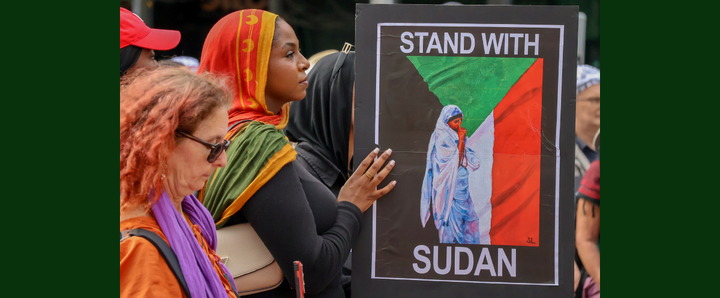.png) Urgent Establishment of a Sudan Special Humanitarian Visa PathwayContext April 15 marked three years since the outbreak of war in Sudan. The crisis has escalated into one of the most severe humanitarian emergencies globally, with over 33.7 million people in need of humanitarian assistance; more than half the country’s population. Approximately 25 million people face acute food insecurity, while more than 14 million children require urgent humanitarian support.¹ Sudan is also experiencing the largest displacement crisis in the world, with more than 12.4 million people forcibly displaced, including approximately 8.6 million internally displaced people and millions seeking refuge in neighbouring countries.² The conflict continues to involve widespread violence against civilians, including documented reports of systematic sexual violence against women and girls, particularly in Darfur.³ United Nations Independent Fact-Finding Mission reports (2026) identify hallmarks and indicators consistent with genocide in Darfur, including ethnically targeted violence and atrocity crimes.⁴ Despite the scale of the crisis, Sudan remains significantly underrepresented in global media and public discourse. This petition responds directly to the urgent humanitarian realities impacting Sudanese communities globally and within Aotearoa New Zealand. Policy and Human Rights Context New Zealand is a signatory to: • The 1951 Refugee Convention and its 1967 Protocol • The Universal Declaration of Human Rights • The International Covenant on Civil and Political Rights (ICCPR) • The Convention Against Torture These frameworks affirm: • The right to seek asylum • Protection from refoulement • The right to family unity • The obligation of states to respond to mass displacement and humanitarian crises This petition is further grounded in the Global Compact on Refugees (2018), which calls for expanded pathways to family reunification, increased international responsibility-sharing and strengthened protection mechanisms in contexts of large-scale displacement. These commitments are reinforced by Te Tiriti o Waitangi-informed principles of equity, active protection, and partnership, which require that state systems operate in ways that uphold dignity and fairness for all communities in Aotearoa. The scale, duration, and severity of the conflict in Sudan warrants a targeted humanitarian response, similar to pathways previously extended to other conflict-affected populations. In particular, there is an urgent need to prioritise family reunification pathways for Sudanese communities already living in Aotearoa, including extended family members, as part of a rights-based and humanitarian response consistent with international obligations. References ¹ UNICEF Sudan Humanitarian Situation Reports (2025–2026); World Food Programme Sudan Emergency Updates (2025–2026). https://www.unicef.org/sudan/reports/unicef-sudan-humanitarian-situation-report-2025 https://www.wfp.org/news/joint-news-release-wfpfaounicef-risk-famine-persists-nearly-195-million-people-face-acute-food ² UNHCR Sudan Emergency and Regional Refugee Response (2025–2026). https://www.unhcr.org/emergencies/sudan-emergency https://data.unhcr.org/en/situations/sudan ³ UN Women Sudan Crisis Reports (2025–2026); Human Rights Watch Sudan Documentation Reports (2025–2026). https://www.unwomen.org/en/articles/faqs/how-women-and-girls-are-being-targeted-in-the-war-in-sudan https://www.hrw.org/world-report/2026/country-chapters/sudan ⁴ United Nations Independent International Fact-Finding Mission for Sudan (2026). https://www.ohchr.org/en/hr-bodies/hrc/fact-finding-mission-sudan2,313 of 3,000 SignaturesCreated by Sudan Advocacy Network Aotearoa
Urgent Establishment of a Sudan Special Humanitarian Visa PathwayContext April 15 marked three years since the outbreak of war in Sudan. The crisis has escalated into one of the most severe humanitarian emergencies globally, with over 33.7 million people in need of humanitarian assistance; more than half the country’s population. Approximately 25 million people face acute food insecurity, while more than 14 million children require urgent humanitarian support.¹ Sudan is also experiencing the largest displacement crisis in the world, with more than 12.4 million people forcibly displaced, including approximately 8.6 million internally displaced people and millions seeking refuge in neighbouring countries.² The conflict continues to involve widespread violence against civilians, including documented reports of systematic sexual violence against women and girls, particularly in Darfur.³ United Nations Independent Fact-Finding Mission reports (2026) identify hallmarks and indicators consistent with genocide in Darfur, including ethnically targeted violence and atrocity crimes.⁴ Despite the scale of the crisis, Sudan remains significantly underrepresented in global media and public discourse. This petition responds directly to the urgent humanitarian realities impacting Sudanese communities globally and within Aotearoa New Zealand. Policy and Human Rights Context New Zealand is a signatory to: • The 1951 Refugee Convention and its 1967 Protocol • The Universal Declaration of Human Rights • The International Covenant on Civil and Political Rights (ICCPR) • The Convention Against Torture These frameworks affirm: • The right to seek asylum • Protection from refoulement • The right to family unity • The obligation of states to respond to mass displacement and humanitarian crises This petition is further grounded in the Global Compact on Refugees (2018), which calls for expanded pathways to family reunification, increased international responsibility-sharing and strengthened protection mechanisms in contexts of large-scale displacement. These commitments are reinforced by Te Tiriti o Waitangi-informed principles of equity, active protection, and partnership, which require that state systems operate in ways that uphold dignity and fairness for all communities in Aotearoa. The scale, duration, and severity of the conflict in Sudan warrants a targeted humanitarian response, similar to pathways previously extended to other conflict-affected populations. In particular, there is an urgent need to prioritise family reunification pathways for Sudanese communities already living in Aotearoa, including extended family members, as part of a rights-based and humanitarian response consistent with international obligations. References ¹ UNICEF Sudan Humanitarian Situation Reports (2025–2026); World Food Programme Sudan Emergency Updates (2025–2026). https://www.unicef.org/sudan/reports/unicef-sudan-humanitarian-situation-report-2025 https://www.wfp.org/news/joint-news-release-wfpfaounicef-risk-famine-persists-nearly-195-million-people-face-acute-food ² UNHCR Sudan Emergency and Regional Refugee Response (2025–2026). https://www.unhcr.org/emergencies/sudan-emergency https://data.unhcr.org/en/situations/sudan ³ UN Women Sudan Crisis Reports (2025–2026); Human Rights Watch Sudan Documentation Reports (2025–2026). https://www.unwomen.org/en/articles/faqs/how-women-and-girls-are-being-targeted-in-the-war-in-sudan https://www.hrw.org/world-report/2026/country-chapters/sudan ⁴ United Nations Independent International Fact-Finding Mission for Sudan (2026). https://www.ohchr.org/en/hr-bodies/hrc/fact-finding-mission-sudan2,313 of 3,000 SignaturesCreated by Sudan Advocacy Network Aotearoa -
 Pledge: Vote for KaiWe’re food producing champions. We should be able to feed our people. Too many children go to school hungry. Too many people are skipping meals because the money runs out before the week does. Too many of us are making tough choices between nutritious food, rent, power, health care, fuel and other essentials. As a nation, we’ve never been short of ingenuity when something needs fixing. Our food system needs redesigning, and we all need to work together to find the solutions. We need a commitment to a long term plan to deal with the underlying causes of food insecurity, rather than just muddling along with an increasing amount of hungry families needing foodbanks. We are everyday people: iwi, hapū, whānau members, mums and dads, aunties and uncles, farmers, fishers and food producers, health workers, community groups, educators, businesses, organisations, and eaters. No matter who we are or where we are from, we all agree food is not getting the serious political attention it deserves, and that needs to change. We can do better. We are calling on all political parties to make a genuine commitment to a food system that works for everyone. We want to see this commitment before the election so we can support those with the best solutions. Specifically, we want to see: A long-term plan. Affordable, healthy kai for everyone. Farming and food that looks after animals, the land and the ocean. A fair go for local producers, manufacturers and food businesses. Good food environments for our tamariki / children. A food system grounded in Te Tiriti o Waitangi. Communities having a decision-making role in their kai / food system. Celebration and protection of our food cultures. We believe Aotearoa New Zealand can become a place where everyone has access to good food, where local kai systems thrive, food producers are valued, communities are resourced and exports are a vital part of our economy. We’re not asking political parties to agree on everything but access to kai is fundamental. By signing this pledge to vote for kai you are sending a message to political parties across the spectrum that you expect to see robust policies that will strengthen our food systems. We will update everyone who signs this pledge about what commitments each political party makes in relation to our demands.2,101 of 3,000 SignaturesCreated by Angela Clifford
 -
 Restore Funding for Wellington’s Citizens Advice BureauThese cuts will hit hardest for: • people struggling with the rising cost of living; • workers facing redundancy or employment issues; • tenants dealing with housing insecurity; • migrants and former refugees; • disabled people, older people, and students; • whānau experiencing hardship or isolation. Citizens Advice Bureau Wellington provides vital free information, advice, and support including budgeting advice to more than 11,000 people every year. With the impacts of the high cost of living, continuing public service cuts, and growing job losses in Wellington, the support CAB provides is more critical than ever. Wellington CABs are powered by over 125 dedicated volunteers, but volunteers alone cannot sustain the service. Continued funding is essential to maintain physical spaces where people can access in-person support, and to retain the small team of staff who coordinate services, train volunteers, and ensure the CAB service remains accessible and effective. Wellington CABs need every cent of the approximately $240,000 per annum they have been receiving from Council to support Wellingtonians. Yet Council has slashed that funding to just $100,000. This puts at risk the survival of the CAB service in Wellington. For decades, CABs have helped people navigate tenancy issues, employment disputes, immigration processes, financial hardship, family challenges, and access to government, council and community services. CAB services are free, confidential, independent, and available to everyone. At a time when community need is increasing, Wellington City Council should be strengthening this essential service – not undermining it. This includes other community groups that we work alongside. We ask Wellington City Council to: • Reverse the funding cuts to Wellington CABs • Commit to a sustainable long-term funding partnership for CAB services in Wellington. Removing this funding will not remove the need. It will simply remove one of Wellington’s most trusted and accessible sources of support. Sign the petition and call on Wellington City Council to restore full funding for Wellington Citizens Advice Bureau. Please share widely. References • PwC, Service Review Citizens Advice Bureau Wellington (December 2018) • ImpactLab, Citizens Advice Bureau North Shore Incorporated Relationship-related Enquires ImpactLab GoodMeasure Report (October 2022) - showed CAB services provided a $1:$13.20 social return on investment. Other ways you can help • Contact the Mayor and your local Councillors to tell them you oppose the cut to Wellington CAB funding and ask them to fully reinstate the funding and provide long term funding for the CAB. Find details about your local councillor here https://wellington.govt.nz/your-council/about-the-council/mayor-and-councillors/councillors • Spread the word to friends, whānau, and your community. • Help people who are digitally excluded to sign the petition here or in person at their local CAB.9,892 of 10,000 SignaturesCreated by Sacha Green
 -
 STOP New ICE-style Powers To Request ID & Other Measures Proposed in the New Immigration BillThe changes proposed erode Aotearoa’s longstanding commitment to fundamental human rights and humanitarian principles. It is clear that the effect of the changes proposed will have a significant, negative impact on everyone, all visa holders, but especially people seeking asylum, refugees and the broader refugee protection framework in Aotearoa. It will affect: 1. Their right to stay if they find love or are offered a job. 2. Their rights to appeal to stay on humanitarian grounds. 3. Everyone's right to live free from being required by Immigration Officers to provide ID on request in the community, at home or at work. New ICE-style Powers for Immigration Officers to Request ID on suspicion: We are alarmed by the new powers proposed for Immigration Officers to request identification documents from people they suspect could be liable to deportation or in breach of visa conditions because: • In practice, it is clear that these powers are likely to extend to people who are in Aotearoa legally, such as people seeking asylum and refugees but also residents or citizens, and will be used disproportionally against people based on their race, ethnicity or country of origin. • It will be particularly harmful to people seeking asylum and refugees, many of whom have experienced heightened and harmful government monitoring in their countries of origin. • Rather than fostering a sense of safety and belonging, these provisions risk increasing existing vulnerabilities and erode trust in public institutions. • It risks vulnerable populations going further into the shadows. Individuals may avoid seeking medical care or even reporting crimes, like workplace exploitation or domestic violence, for fear of immigration enforcement and deportation. Ban on alternative visa pathways for people who withdraw their asylum claim • It is cruel to ban people seeking asylum who withdraw their claim, because they have fallen in love, married or are in a settled relationship with a New Zealand partner, from being eligible for an alternative visa such as a Partnership Visa • It is cruel to ban people seeking asylum who withdraw their claim from being eligible for an alternative visa such as a Skills or Job specific Work to Residence Visa because they have been offered employment. Limitation on humanitarian appeal rights • The limitation on humanitarian appeal rights will reduce access to independent, experienced oversight at a critical point in the immigration system.These oversight and appeal rights are an important safeguard, particularly for individuals with complex or evolving humanitarian needs, including those facing serious harm if returned. • Limiting appeal rights could also be unduly harsh on the children of those liable for deportation. Currently, many deportation cases regarding temporary visa holders (such as those who have sought asylum here over many years) involve families with children in school who have spent the majority of their lives in Aotearoa New Zealand. Deportation can have major, adverse impacts on children’s health and well-being, notably through family separation, disrupted education, and being returned to an unfamiliar country where they may not speak the language. • Retaining the right to appeal deportation is an important avenue for protecting children’s rights and upholding New Zealand’s obligations under the UN Convention on the Rights of the Child. Conflation of people seeking asylum, seeking safety, with criminals • This Bill and its public introduction by the Minister makes a problematic conflation between serious criminal offending by long-term residents and measures targeting asylum claimants, packaging both under the framing of "Enhanced Risk Management." • These provisions address entirely different populations with entirely different legal statuses. One group has been convicted of serious crimes; the other is exercising a fundamental right recognised under the Universal Declaration of Human Rights and the Refugee Convention. • Grouping them in a single legislative instrument, such as this Bill, undermines public understanding of what the asylum process is and reinforces a damaging association between asylum seeking and criminality that is neither accurate nor justified, putting communities at risk. We therefore call on this Bill to be scrapped. For more about Asylum Seekers Support Trust: Website: asst.org.nz Facebook: facebook.com/ARCI.NZ Instagram: @asylumseekersnz1,594 of 2,000 SignaturesCreated by Asylum Seekers Support Trust
-
 I'm ready to vote the Government outBeing ready to change the Government is about taking simple action that will count on November 7th. A new law means people will no longer be able to register to vote during the voting period. Last election 450,000 people registered to vote during the voting period - many of them Māori, Pacific communities and young people. You, your friends and loved ones need to register before October 25th to be able to vote from October 26th to November 7th. Every time you sign and share this petition, you send a signal to the Government, and your friends and networks get a critical memo on registering to vote in time. The last few years have told us, when push comes to shove we turn up for each other and stand up to be counted. It’s time to do it again. Authorised by K Hartendorp, PO Box 19069, Wellington 61493,182 of 4,000 SignaturesCreated by ActionStation Team