
Search result for "New Plymouth ".
-
 Golden Triangle by Train: Te Huia to TaurangaWe request that the Government and key transport decision-makers actively support the ongoing future and growth of Te Huia (Auckland and Waikato passenger train) and passenger rail in the Golden Triangle. This includes providing certainty for Te Huia beyond its trial period, supporting its long-term development so it becomes more frequent and accessible to more people. We want more frequent services, more stops and Golden Triangle rail - a passenger rail network linking Auckland, Waikato, and Bay of Plenty as a crucial part of New Zealand’s public transport system.5,691 of 6,000 SignaturesCreated by The Future is Rail
 -
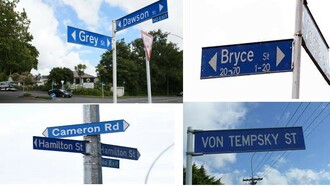 Rename Colonial Street Signs in Kirikiriroa/Hamilton City.Dear Hamilton City Council, Please remove ALL colonial names on street signs in Kirikiriroa/Hamilton City that do NOT reflect integrity.58 of 100 SignaturesCreated by Jacquelyn Elkington
 -
 Call for an Immediate, Permanent Ceasefire in Gaza and Ethical Action for PalestineWe, the undersigned, urge Council to act in accordance with international law, human rights, and community values by: 1. Publicly supporting an immediate and permanent ceasefire in Gaza and an end to Israel’s illegal occupation of Palestinian Territories, as affirmed by UN resolutions, the ICJ, and the Geneva Conventions. 2. Developing and adopting an ethical procurement and investment policy that seeks to avoid contracts with companies complicit in grave breaches of international law, including those profiting from illegal Israeli settlements and occupation — consistent with UN Security Council Resolution 2334, the Fourth Geneva Convention, and recent UN Special Rapporteur findings. Council may develop a practical implementation framework that aligns with local procurement procedures and legal obligations, while reflecting community expectations and international ethical standards. Supporting Statement As of 25 June 2025, at least 56,156 Palestinians have been killed in Gaza, including more than 17,121 children, with a further 132,239 injured, and countless missing. In addition to targeting civilians, Israel has destroyed civilian objects, including hospitals, schools, UN shelters, and entire neighborhoods. For 11 weeks (2 March–18 May), no humanitarian aid entered Gaza due to the siege imposed by the Israeli authorities. Since 18 May, effective aid delivery has been replaced by the Israeli-and US-backed Gaza Humanitarian Foundation (GHF), which by 31 May had sent only 10% of the aid needed into Gaza, and is accused of undermining the core humanitarian principles of humanity, neutrality, impartiality, and independence. At least 549 people seeking food from the GHF-run hubs have been killed by Israeli soldiers, and more than 4,066 others wounded. Basic humanitarian supplies, including food, fuel, medical aid and vaccines for children, have largely run out, with devastating impact on the population. The UN warns that Israel’s campaign of deliberate starvation has left the entire population at risk of famine, and that its mission to help civilians in Gaza is "one of the most obstructed ... in recent history". Israel’s obstruction of humanitarian aid and its unchecked military assault defy international calls for a ceasefire and the ICJ’s finding that there is a plausible case of genocide. Israel has repeatedly ignored the Court’s binding provisional measures, and has escalated its expansion of settlements in the West Bank - which the UN, the ICJ, and multiple human rights organisations have declared unlawful. The international community, including individual states and local governments, must not be silent in the face of such profound and continuing injustice and human suffering. Granting impunity to such a devastating level of dehumanisation sets a terrifying precedent. Our silence teaches the next generation what we value, and what we are willing to ignore. Aotearoa New Zealand is a founding member of the UN and a signatory to the Genocide Convention, Geneva Conventions, and other key human rights treaties. Under these, New Zealand is legally bound to prevent and not be complicit in genocide and war crimes. It must also uphold UNSC Resolution 2334 (2016), which affirms the illegality of Israeli settlements on the West Bank of the Palestinian Territories, and calls on all states to distinguish between Israel and the territories it occupies. In 2020, the UN Human Rights Council (HRC) released a list of organisations involved in the maintenance, development, and consolidation of these illegal settlements, and updated this database in 2023. Binding provisional measures issued in 2024 by the ICJ — the principal judicial organ of the UN — include the requirement that states and international institutions prevent companies from enabling international crimes. Our government supports the ICJ process.1,363 of 2,000 SignaturesCreated by thyme4action
 -
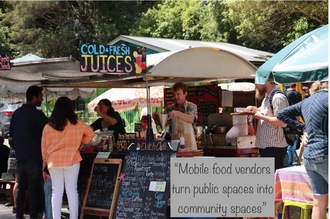 Make food regulations fair and affordable for small businessesWe call on you to end discriminatory food charges and regulatory requirements which place an unfair and unrealistic burden on small food businesses – particularly small food producers, food stall holders, mobile food vendors, coffee carts, food trucks, and low-risk businesses (e.g home businesses like cake artists) - and undermines their ability to survive in the current economic climate. We expect all small food businesses to uphold the same standards of food safety as the rest of the industry, however compliance for small businesses needs to be affordable and simple enough to keep them financially and logistically viable; especially as so many are struggling to stay afloat due to current economic challenges. We ask that you: - Revoke MPI's ability to charge all food businesses in New Zealand the same annual Food Act levy regardless of size or level of risk posed to consumers. By charging a flat fee for all domestic food producers, this levy unfairly penalises small businesses. Furthermore, the proposed services of New Zealand Food Safety (NZFS) are unlikely to have any tangible benefits for small food businesses (despite proposed theoretical benefits) therefore we disagree with levying them at all for these services. - Revoke MPI's ability to charge the Food Act levy per site or premise registered. Charging per site has the adverse effect of penalising small food businesses (such as those selling at markets) and mobile food vendors (such as coffee and food carts), that have one premise for food preparation and a second (mobile) premise for selling their food (even if they only run a stall once a week). These mobile vendors will have to pay at least double the levy large restaurants pay, even though cafes and restaurants can open all day, every day. - Significantly decrease and limit onerous regulation requirements and fees for small businesses to comply with food safety rules in order to protect their viability. The current fees are crippling for small businesses. We are aware that territorial authorities (local councils and independent auditors) set fees for registration and verification and is theoretically outside of government control. However, NZFS influences the cost of registering with territorial authorities and dictates how a business is verified. Verification of small food businesses is too intense - and therefore expensive - and overly onerous for them. We ask that NZFS be required to find more realistic and affordable ways for small businesses to comply with food safety regulations. - Create a fairer regulation and fees system, potentially based on number of staff employed, gross income declared to IRD, and/or hours/days open. The food act is meant to take a risk-based approach to food safety, yet the current regulatory framework ignores three key risk factors: the size of a food operation and the duration and frequency it is operating for. Both of these are related to another risk factor: the quantity of food a business sells. Because these are not considered, regulatory requirements for small businesses are overly burdensome and expensive as these businesses are treated like large, full-time operations. - Require inclusion of small food businesses in considering and developing changes to food regulation and fees, not just afterwards in a consultation period. No representatives from the food industry, especially small businesses, were included in the development of the NZFS proposal to maintain and expand its regulatory services, therefore resources have been wasted on making changes that are not relevant to the industry, are unlikely to be effective and, therefore do not provide value for their investment. - Require NZFS to be accountable for its spending and ensure its use of resources are prudent while achieving genuine and measurable benefits to public health and the country's food safety reputation. We believe the spending of NZFS in the past has been frivolous. This includes spending money publishing and distributing a free food safety magazine that had no proof of efficacy (and is unlikely to have had high readership in the absence of other interventions to improve food safety culture) and producing expensive food safety advice videos that could have been filmed on a phone and produced in a matter of hours.1,930 of 2,000 SignaturesCreated by Ben Plows-Kolff
 -
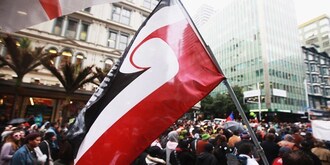 Secure the Māori seatsGive the Māori seats the same level of protection as every other seat in Parliament. The Māori seats are an integral part of our current Parliamentary system. We support the Electoral Entrenchment of Maori Seats Amendment Bill as they should be treated in the same way as other seats.2,402 of 3,000 SignaturesCreated by Max Harris
 -
 No more food waste to landfill Thames-CoromandelWe are calling on the Thames Coromandel District Council to stop sending food waste to landfill and implement other measures that transform waste into a resource. More specifically, we propose TCDC support home-scale food waste solutions, provide kerbside food waste collection and composting, support food businesses' waste minimisation, and deliver an ongoing education campaign.1,155 of 2,000 SignaturesCreated by Thames Food Waste Group
-
 Fix the CodeWe are calling on NZTech and the Signatories to work with us to develop a process to #FixTheCode that meets the needs of everyone at risk of harm from these companies43 of 100 SignaturesCreated by Coalition for Better Digital Policy
 -
 KiwiSaver Parity ProjectWe propose a change to the KiwiSaver Act to reduce inequality in retirement savings. We believe there is an urgent need for a Contribution Sharing Scheme to allow partners to share KiwiSaver contributions so that one is not financially disadvantaged by staying home with children or earning less.934 of 1,000 SignaturesCreated by Rupert Carlyon
-
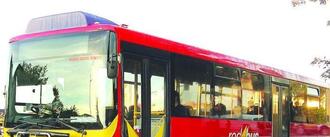 Save the Bromley Bus ServicePlease retain some level of public bus service through the suburb of Bromley. By entirely discontinuing the Bromley end of the 145 bus route, as is currently proposed, the suburb will be left without a vital connection to essential services such as doctors, pharmacies, grocery stores, libraries and well-being providers. Please find a way to still provide a bus service to link the Bromley community to these services.203 of 300 SignaturesCreated by Emma Shaw
 -
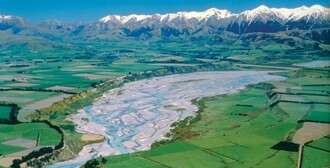 Re-establish fair representation on the Canterbury Regional CouncilE kare, e te minita, Honourable Nanaia Mahuta We ask you to review the decision of the Local Government Commission on the representation arrangements to apply for the election of the Canterbury Regional Council to be held on 12 October 2019. This review must make each voter’s vote equal, in order to re-establish a fair representative democracy. Section 19V(2) of the Local Electoral Act 2001 states a rule that constituencies should comply with ‘’the of being equal numbers within +/- 10% rule.’’ The present arrangement maintains a difference well outside the 10 percent rule. With rural areas consistently greater that urban Christchurch areas, the difference between the Christchurch seats and the rural seats is at least 24%, on average. Non-Christchurch seats have about 9200 fewer residents than the average Christchurch seat. And when the largely rural Ōwhanga is considered, the percentage difference between urban Christchurch and the rural/small town seats is even larger.528 of 600 SignaturesCreated by Stephen Howard