
1,000 signatures reached
To: To: Rt Hon Prime Minister Christopher Luxon, the Finance Minister Hon Nicola Willis, the Minister of Education Hon Erica Standford, the Minister of Transport Hon Chris Bishop and all Members of the New Zealand Parliament.
Open Letter: Free Public Transport for ALL Students under 25 to keep every young person in education
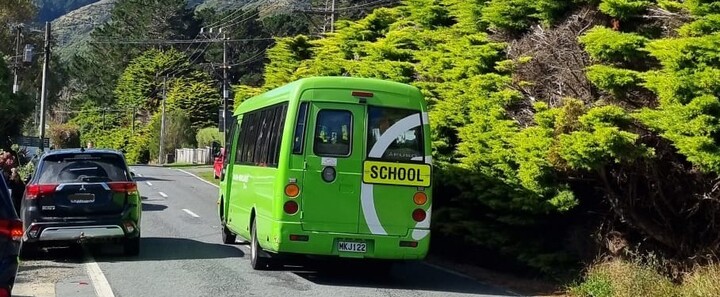
We the undersigned are writing to address the crisis facing our young people.
Aotearoa New Zealand is in the grip of a fuel crisis driven by conflict in the Middle East. Petrol prices have surged past $4 a litre in some parts of the country, and the consequences are being felt most acutely by families who cannot afford bus fares, let alone drive their children to school. Students who rely on public transport to reach university and higher education campuses are also feeling it.
This Open Letter is grounded in the Government’s own words and commitments. The Prime Minister, Minister of Education and Minister of Transport have all spoken clearly about their determination to protect education during this crisis. We are simply asking them to match their words with urgent action, for every child and young person in this country, whether they live in a city, on a farm and everywhere in between.
The solution is simple: Free Fares for all children, young people and under 25’s
Therefore, we call on the Government to respond to this crisis by:
- Immediately reinstate free public transport for all children and young people aged 5-18 on buses, trains and ferries across Aotearoa for the duration of the fuel crisis and beyond.
- Immediately reinstate free or half-price public transport for all young people aged 19-25 enrolled in tertiary education (university, polytechnic or any other approved provider of higher education).
- Restore all rural school bus routes that were cancelled or amended in the 2024 Ministry of Education reviews and impose a permanent moratorium on further cancellations until a full community-led review of rural transport is completed.
- Lower the eligibility threshold for government funded rural bus services from eight students to four, as recommended by Federated Farmers, to better reflect the realities of rural communities.
- Guarantee that school bus operators are resourced to continue running rural routes despite rising diesel costs, by classifying school transport as an essential service and ensuring diesel fuel is prioritised for school buses in any future fuel rationing phases.
- Work with NZTA and regional councils to rapidly implement free urban fare changes.
- Commit to making free fares for under 18s permanent policy beyond the immediate crisis, as long-term investment in the education and well-being of New Zealand’s children and young people.
The Government has said, in its own words, that it will take ‘every step necessary” to keep children in the classroom. We are calling on Ministers to take the most obvious and proven steps available to them: restore free and subsidised fares, restore cancelled bus routes, and fund the school buses that rural children depend on.
“We do not want to see children outside the classroom as occurred during Covid. We do not want to see children forced to learn from home. We think maintaining access to schools through all of these phases is essential, and the Ministry of Education are working actively on plans to ensure that. This generation have already had years of learning disrupted by the Covid experience that had a marked impact on their achievement, and we will be taking every step necessary to keep kids learning in the classroom.” - Finance Minister Nicola Willis, ‘Government Fuel Crisis Rationing Plan Announcement’, 29 March 2026 (RNZ/Scoop).
“We do not want to see children outside the classroom as occurred during Covid. We do not want to see children forced to learn from home. We think maintaining access to schools through all of these phases is essential, and the Ministry of Education are working actively on plans to ensure that. This generation have already had years of learning disrupted by the Covid experience that had a marked impact on their achievement, and we will be taking every step necessary to keep kids learning in the classroom.” - Finance Minister Nicola Willis, ‘Government Fuel Crisis Rationing Plan Announcement’, 29 March 2026 (RNZ/Scoop).
“I just want to be clear: kids are going to school, they are not sitting at home. This is not Covid, this is about a fuel crisis.’ - Prime Minister Christopher Luxon, 27 March 2026 (RNZ).
These are strong and unambiguously clear commitments. But promises alone will not get a child onto a bus. The Government must now provide the practical means to back these promises up and free public transport is the most direct and effective tool available.
Why is this important?
This is an equity issue
The fuel crisis does not impact all New Zealanders equally. Low-income families are the least able to absorb rising transport costs. The Spinoff has reported that the Government’s own fuel relief package leaves out half of the children living in material hardship. Both urban and rural families face similar challenges - being able to afford to get their kids to school.
“She said attendance was already dropping at some schools, with parents unable to afford to drive children to class. ‘The impact of the fuel disruption on schools is much broader and more complex than attendance figures suggest; however, attendance will absolutely be affected and is already showing signs of pressure in our communities.’” - Lysandra Stuart, New Zealand Principals’ Federation, 25 March 2026 (NZ Herald).
University students, especially those in their first year of independence, are similarly challenged. Many have no car and rely entirely on public transport to reach their campuses. A sudden fare increase is not just an inconvenience to them, it is a barrier to their education and their future.
New Zealand has long held the view that education is a right not a privilege. That principle is meaningless if young people cannot afford to get to where their education takes place.
A compounded crisis for rural communities
The fuel crisis is hitting both urban and rural families hard. Rural children and young people have no public transport alternatives, they often live far from school, and over the past two years, the Government has systematically cancelled the school bus routes they depend upon. The current fuel crisis has exacerbated these challenges.
The scale of the challenge is significant. The Ministry of Education reviewed 290 school bus routes in 2024, cancelling or amending 39 of them. By September 2025, a total of 66 rural routes were cancelled. Some of these impacted communities included Te Pōhue, Eskview, Clive, Central Hawke’s Bay, Northland, Gisborne and Manawātū. In Gisborne alone, more than 100 students faced losing their transport to school. These cancellations did not happen because the routes were unnecessary, it was because the Government’s eligibility threshold of eight students per route failed to reflect the realities of small, dispersed rural communities.
“In some areas, these cuts are proving absolutely devastating for the communities, it means some people are seriously considering selling their properties and moving closer to town or into town so their children can access education. In rural areas, there’s no public transport options, there’s no footpaths or cycleways, our roads are not safe for kids to be biking to school. There’s a whole raft of issues, and not all parents in rural communities are self-employed. They can’t take an hour off in the morning or change around their day to take kids to school.” - Gill Naylor, Rural Women New Zealand President, 15 October 2024 (NZ Herald/RNZ).
We, the undersigned, are not only calling for free fares on existing urban public transport networks but for a broader commitment to rural school transport. This includes the restoration of cancelled bus routes, an urgent review of the eligibility criteria, and guaranteed funding for school bus services. Ensuring no child or young person in Aotearoa loses access to education regardless of their circumstances or where they live.
Full letter can be read here from 12pm Monday 6 April 2026
Full letter can be read here from 12pm Monday 6 April 2026