
Search result for "国电电力2025年至2026年新能源项目箱式变压器设备框架采购公开招标".
-
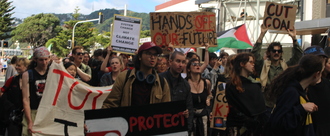 VUW: Divest from Fossil FuelsAll signatories demand that Victoria University of Wellington | Te Herenga Waka takes urgent action to: 1. Disclose any financial investment into fossil fuel companies via the VUW Foundation Trust (the Foundation); 2. Divest from fossil fuels by terminating any fossil fuel investments; and 3. Implement a specific exclusion policy for the Foundation, ensuring zero tolerance for fossil fuel investments. VUW must uphold their commitments. We call for Vice-Chancellor Nic Smith and the Office of the Vice-Chancellor, the Chief Financial Officer, and the Foundation Board to acknowledge these demands and enact the necessary changes to uphold VUW’s existing commitments to divest from fossil fuels.953 of 1,000 SignaturesCreated by Climate Action & Resistance VUW
 -
 Stop Failing our Māmā: Improve Perinatal Mental Health Services in AotearoaThis petition calls for the New Zealand Government to urgently reform perinatal mental health services and fund the establishment of mother and baby units to better support māmā experiencing acute postpartum mental illness. Call to Action: We urge the New Zealand Government to: • Implement reforms to the Mental Health Act to ensure that provisions are in place to ensure that women in the perinatal period receive appropriate treatment, and are treated with dignity and respect. • Fund mother and baby units that are accessible to postpartum women who are experiencing acute mental illness that requires inpatient treatment • Address the unique needs of pregnant and postpartum women within mental health services, ensuring that care is gender-sensitive and trauma-informed.1,789 of 2,000 SignaturesCreated by Kristy Maguire
 -
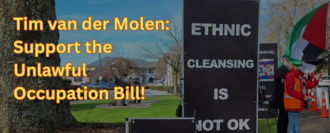 MP Tim van der Molen: Support the Unlawful Occupation of Palestine BillAs your constituents, we are calling on MP Tim van der Molen our Member of Parliament, for the Waikato Electorate, Tim van der Molen, to support the Unlawful Occupation of Palestine Sanctions Bill. [1] If there are sufficient numbers voting on a conscience vote, this bill can be passed through the House. We call on you to: • Support the Unlawful Occupation of Palestine Sanctions Bill and its passage through the New Zealand Parliament • Uphold the ruling of the International Court of Justice and respect New Zealand’s commitment of international law in response to Israel’s illegal occupation of Palestine.106 of 200 SignaturesCreated by Margaret Stuart
 -
 Call for an Immediate, Permanent Ceasefire in Gaza and Ethical Action for PalestineWe, the undersigned, urge Council to act in accordance with international law, human rights, and community values by: 1. Publicly supporting an immediate and permanent ceasefire in Gaza and an end to Israel’s illegal occupation of Palestinian Territories, as affirmed by UN resolutions, the ICJ, and the Geneva Conventions. 2. Developing and adopting an ethical procurement and investment policy that seeks to avoid contracts with companies complicit in grave breaches of international law, including those profiting from illegal Israeli settlements and occupation — consistent with UN Security Council Resolution 2334, the Fourth Geneva Convention, and recent UN Special Rapporteur findings. Council may develop a practical implementation framework that aligns with local procurement procedures and legal obligations, while reflecting community expectations and international ethical standards. Supporting Statement As of 25 June 2025, at least 56,156 Palestinians have been killed in Gaza, including more than 17,121 children, with a further 132,239 injured, and countless missing. In addition to targeting civilians, Israel has destroyed civilian objects, including hospitals, schools, UN shelters, and entire neighborhoods. For 11 weeks (2 March–18 May), no humanitarian aid entered Gaza due to the siege imposed by the Israeli authorities. Since 18 May, effective aid delivery has been replaced by the Israeli-and US-backed Gaza Humanitarian Foundation (GHF), which by 31 May had sent only 10% of the aid needed into Gaza, and is accused of undermining the core humanitarian principles of humanity, neutrality, impartiality, and independence. At least 549 people seeking food from the GHF-run hubs have been killed by Israeli soldiers, and more than 4,066 others wounded. Basic humanitarian supplies, including food, fuel, medical aid and vaccines for children, have largely run out, with devastating impact on the population. The UN warns that Israel’s campaign of deliberate starvation has left the entire population at risk of famine, and that its mission to help civilians in Gaza is "one of the most obstructed ... in recent history". Israel’s obstruction of humanitarian aid and its unchecked military assault defy international calls for a ceasefire and the ICJ’s finding that there is a plausible case of genocide. Israel has repeatedly ignored the Court’s binding provisional measures, and has escalated its expansion of settlements in the West Bank - which the UN, the ICJ, and multiple human rights organisations have declared unlawful. The international community, including individual states and local governments, must not be silent in the face of such profound and continuing injustice and human suffering. Granting impunity to such a devastating level of dehumanisation sets a terrifying precedent. Our silence teaches the next generation what we value, and what we are willing to ignore. Aotearoa New Zealand is a founding member of the UN and a signatory to the Genocide Convention, Geneva Conventions, and other key human rights treaties. Under these, New Zealand is legally bound to prevent and not be complicit in genocide and war crimes. It must also uphold UNSC Resolution 2334 (2016), which affirms the illegality of Israeli settlements on the West Bank of the Palestinian Territories, and calls on all states to distinguish between Israel and the territories it occupies. In 2020, the UN Human Rights Council (HRC) released a list of organisations involved in the maintenance, development, and consolidation of these illegal settlements, and updated this database in 2023. Binding provisional measures issued in 2024 by the ICJ — the principal judicial organ of the UN — include the requirement that states and international institutions prevent companies from enabling international crimes. Our government supports the ICJ process.1,361 of 2,000 SignaturesCreated by thyme4action
 -
 The Government must apologise to disabled adults, children and their whānauPrime Minister Christopher Luxon, Deputy Prime Ministers David Seymour and Winston Peters, Minister for Disability Issues Louise Upston, We, the undersigned, urge the New Zealand Coalition Government to acknowledge and apologise for the harm inflicted upon disabled people and their families since 18 March 2024. March 18, 2025, marks one year since the government began disrupting, removing and restricting supports for disabled tamariki and adults. It also marks one year since former minister Penny Simmonds falsely claimed in Parliament that parents and carers of disabled tamariki were misusing disability support funding. Her repeated public accusations were an attack on a vulnerable community. Her words caused families and carers shame, distress, and trauma. This Coalition Government has forced disabled children and adults, along with their families, to endure untrue claims and cruel jibes. Alongside this, the Coalition Government has also limited the resources and support available to disabled people. It remains unclear if or when support will be returned to disabled communities. In wrongly suggesting parent carers were taking funds from disabled people, this government tried to create a wedge between disabled adults and parents and carers of disabled tamariki. This has not worked - the community is united. Disabled adults are not receiving increased or better support as a result of the removal of flexibility for carer supports, in fact - there have just been more restrictions on the use of all flexible supports, disrupting disabled adults' independent lives as much as those of their families. In the current environment the NASC service acts as fund manager for the government, rather than in partnership with disabled people and families. NASC services must be sufficiently funded to meet the current and future need of the disabled community, but also they must act for, and with, disabled people and their families not as gatekeepers for those needing support. Parent carers of disabled tamariki have said the impacts of the March 18 changes have disrupted their family’s security, ended relationships, and instilled a persistent fear that remains. They say they are unable to plan for the future and feel in limbo, lost, and unsupported. There is now a mental health crisis for parents of disabled tamariki with higher-than-usual incidences of anxiety, suicidality and distress. Rates of mental distress in Aotearoa continue to climb. International research shows that parents of disabled tamariki live with higher than normal incidences of anxiety, suicidality and distress. Uplifting wellbeing and increasing supports to reduce prevalence of psychological distress and suicidal behaviour for this carers is crucial. The decision to end new or planned residential places has had an enormous impact on disabled tamariki, adults and their parents, despite this Government's denials. The decision to place a loved one into residential care is one of the most difficult faced by families. As published in the New Zealand Medical Journal, the decision is often made only when severe difficulties are being experienced, and family carers develop burnout and mental health challenges. Before addressing issues of insufficient funding, inadequate services, and shortfalls in the workforce, this coalition government must take responsibility for its role in perpetuating harm. We call upon the government to do the following: 1. Apologise to disabled adults, and their families and carers for accusations of mismanagement of support funding and acknowledge the harm this has caused. 2. Ensure access to tangible mental health support for disabled adults and their families. 3. Develop supports and services that work alongside parents and disabled people. Where staff have the skill and experience to listen and support, rather than act as transactional gatekeepers. Until steps towards repair are taken, attempts at consultation and solutions will be viewed as insufficient and insincere. The time to apologise is overdue. It must happen now. We await your response and commitment to taking the necessary steps towards healing and justice for disabled people and their families in Aotearoa.11,746 of 15,000 SignaturesCreated by Awhi Ngā Mātua
 -
 Open Letter: Urgent Consent Law Reform Needed in AotearoaWe write on behalf of the Consent Law Reform campaign to urge immediate action on modernizing New Zealand’s sexual consent laws. New Zealand's consent laws are outdated, and in desperate need of review. New Zealand deserves clear consent laws that reflect the type of healthy relationships we want to see in our country. On 27 September 2022, Supported by HELP Auckland, Dear Em, RespectEd, Wellington Rape Crisis and other advocacy groups, Zubair formally delivered a 12,177-signature petition to Parliament calling for consent law reform. This petition reflected “an outcry from young people about the need for an affirmative definition of consent,” as HELP Auckland noted at the handover. In August 2023, the Justice Select Committee released its report on Layba Zubair’s petition, with unanimous cross-party support calling for Parliament to “consider re-examining the law on consent.” The Committee emphasized that “having a consistent definition of consent in the legislation may help to protect victims of sexual crimes,” and it specifically recommended examining all sexual conduct offences to include a clear, statutory definition of consent. We welcome the Committee’s finding that our consent laws are “due for re-examination”, and we remind all political parties that this is exactly the issue Layba raised in her petition. As the Committee urged, any review should listen to survivors and experts to ensure the law truly protects victims. Key Issues with Current Law Throughout the consent law reform campaign, we have consistently highlighted three key legislative issues which require addressing: • No statutory definition of consent. Currently the Crimes Act defines consent by what it is not (e.g. no deception, no force) but never what it is. This gap leaves juries and judges free to apply myths about consent. For example, victims are still subject to defence arguments that silence or hesitation is automatically consent. As one submission noted, “the absence of a positive definition of consent contributes to negative experiences” for sexual assault complainants. • Age-related inconsistencies. Our laws protect very young children from being asked about consent, but leave older minors exposed. The recent Victims of Sexual Violence bill (passed June 2025) finally ensures that children under 12 cannot be questioned about whether they consented, rightly affirming that children cannot consent to abuse. However, this change means that 12–16-year-olds now become the sole remaining cohort of minors who can be subjected to consent-defence arguments in court. In other words, once the under-12 protections take effect, all survivors aged 12–16 can still have their credibility unfairly attacked by outdated notions of consent under section 128B. The campaign has long warned that this loophole causes amplified harm for young survivors and must be closed by clarifying the law’s stance on age and consent. • Problematic “reasonable belief” standard. Even where the Act requires proof of non-consent, the defendant can argue they had a “reasonable belief” that consent was given. In practice, this has allowed juries to entertain rape myths. New Zealand has no affirmative consent law, which means that a rape myths, such as assumed consent within relationships etcetera may bolster the defendant’s claim of reasonable belief. In short, without a clear definition of consent to guide the “reasonable belief” test, courts may tacitly allow victims’ silence or submission to be read as consent, contrary to the spirit of affirmative consent taught today. The campaign has repeatedly raised this issue in submissions – noting that case law (e.g. Christian v R) still permits a passive acquiescence plus “some factor” (like being in a relationship) to count as consent – demonstrating the urgent need to rethink the standard.942 of 1,000 Signatures
 -
 Withdraw NZ from US operation supporting Israel’s war on GazaWe demand New Zealand end its involvement in the US and UK-led military operation in the Red Sea which is risking lives and aligns us with US support for Israel’s war on the people of Gaza.[1] We are opposed to NZDF involvement in the Red Sea because it enmeshes NZ with US militarism and Israeli war crimes, it is hypocritical and risky, and has no democratic mandate.6,195 of 7,000 SignaturesCreated by Te Kuaka, Peace Action and Justice for Palestine