
500 signatures reached
To: House of Representatives
Never again: Ensure the wellbeing of children and tāngata whaikaha
.png)
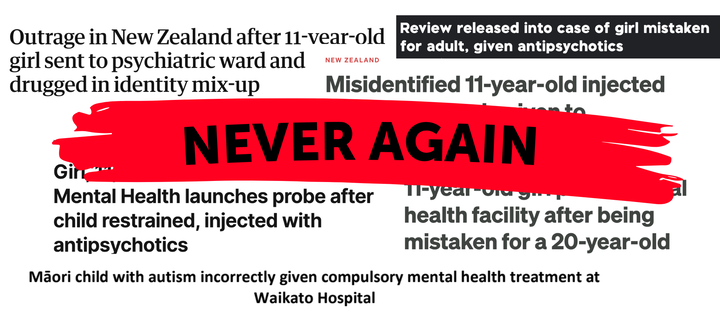
Last year, an 11-year-old autistic and nonverbal child was handcuffed, admitted to a mental health facility, and given at least two doses of anti-psychotic medication after being reportedly mistaken for a 20-year-old mental health patient by police [1].
An independent review found that no cultural support was provided to the young girl, and her disability was not considered beyond initial assessment [2]. The Rapid Incident Review Report (which wasn’t done almost two weeks after the event) concluded that several systemic failings contributed to the distress and trauma experienced by the young person and their whānau [2].
We are calling on the Government to:
- A formal public apology from the Prime Minister, Cabinet, and the five Ministers responsible for Health, Mental Health, Disability Issues, Police, and Crown Relations, together with accountability from Health New Zealand | Te Whatu Ora Board and Chief Executive, Ministry of Health | Manatū Hauora Director-General of Health and Chief Executive and New Zealand Police | Nga Pirihimana O Aotearoa Commissioner.
- A public commitment to an independent, system-wide review on tāngata whaikaha / disabled peoples’ experience across whole-of-government – all agencies.
- Meaningful reform to ensure the rights, dignity, safety, and wellbeing of autistic people and minors are protected across health, disability, mental health, Police – across the whole-of-government/state system.
- Greater public and government awareness, education and understanding of the systemic issues highlighted by this case, with a focus on preventing similar harm from occurring to other tāngata whaikaha and their whānau.
Accountability must apply both to the people involved and to the broader systemic conditions that allow incidents such as this to occur in Aotearoa
Why is this important?
In Aotearoa, tāngata whaikaha (disabled people) experience significant inequalities in healthcare access and quality compared to non-disabled individuals across all stages of life [3]. Similar inequalities are seen within policing systems, where tāngata whaikaha face inadequate support and discriminatory practices [4].
In a report by the Health Quality & Safety Commission Te Tāhū Hauora [3], it was found that:
- Disabled people die from treatable conditions at five times the rate of non-disabled individuals.
- Māori disabled people die from treatable conditions at nearly ten times the rate of non-Māori, non-Pacific, non-disabled individuals.
- These inequalities are intensified for people with multiple disabilities and for Māori and Pacific disabled people.
- Disability is largely absent from health data, as most major health datasets in Aotearoa do not record disability status.
Research from the Donald Beasley Institute regarding policing delivery for tāngata whaikaha [4] found that:
- Police in Aotearoa often lack the training to identify and respond to disability (including neurodivergence, psychosocial disability and learning disability).
- Disabled people often feel their disclosures of disability are not believed or are ignored by police.
- Some disabled people experience escalation of police contact, including use of force due to misinterpretation of disability.
- Disabled people may be criminalised for disability-related behaviour instead of receiving appropriate health or disability support.
No society should tolerate preventable harm caused by systematic failure. Tāngata whaikaha have a right to be treated with dignity, safety, and respect across all services.
References
- https://www.rnz.co.nz/news/national/547526/11-year-old-put-in-mental-health-facility-given-two-doses-of-antipsychotics-minister-says
- https://www.rnz.co.nz/news/national/556934/misidentified-11-year-old-injected-with-drugs-rarely-given-to-children-review-finds
- https://www.hqsc.govt.nz/resources/resource-library/a-window-on-disability/
- https://www.donaldbeasley.org.nz/our-projects/understanding-policing-delivery-takata-whaikaha-ddeaf-and-disabled-people