1,000 signatures reached
To: The Government of Aotearoa New Zealand
Urgent Establishment of a Sudan Special Humanitarian Visa Pathway
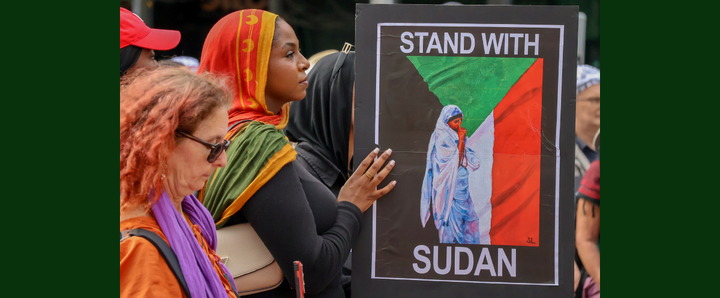.png)
We call on the Government of Aotearoa New Zealand to urgently establish a dedicated humanitarian and family reunification visa pathway for Sudanese communities in Aotearoa who have direct or extended family members displaced and affected by the ongoing war in Sudan. This pathway should be modelled on the Ukraine Special Visa pathway introduced in 2022, ensuring a timely, compassionate, and streamlined response to ongoing humanitarian needs.
The war in Sudan, now entering its fourth year, has resulted in mass displacement, widespread violence, and severe humanitarian conditions. This includes direct threats to civilian life and safety. Many Sudanese people in Aotearoa remain separated from their immediate and extended families, with no safe or accessible pathway for reunification.
We call on the New Zealand Government to:
1. Establish a Special Sudan Humanitarian Visa Pathway
- Create a dedicated visa category allowing Sudanese people in New Zealand to sponsor immediate and extended family members affected by the war.
- Model this pathway on the 2022 Ukraine Special Visa category.
- Include both internally displaced persons and those displaced across international borders.
- Prioritise urgent family reunification pathways for Sudanese communities already living in Aotearoa and extend pathways to extended families.
2. Increase Humanitarian Protection for Sudanese Refugees
- Allocate a significant portion of New Zealand’s refugee quota to Sudanese refugees in recognition of the scale of displacement and humanitarian need.
- Ensure equitable humanitarian responses aligned with previous emergency visa and refugee pathways.
3. Ensure Humanitarian Accessibility and Equity
- Design the pathway to be accessible, fast-tracked, and trauma-informed.
- Remove unnecessary bureaucratic barriers that delay reunification in emergency contexts.
- Ensure culturally responsive and humane processing systems for affected families.
4. Community Wellbeing - Culturally Responsive & Safe Settlement
- Ensure Sudanese families arriving through humanitarian pathways are supported to settle safely and with dignity in Aotearoa. This should include access to culturally responsive mental health support, trauma-informed services, English language learning, employment support, housing assistance, education pathways, and community-led settlement support.
This initiative aligns with Aotearoa New Zealand’s commitments to:
- International human rights law
- Refugee protection principles
- Humanitarian obligations
- Te Tiriti o Waitangi- informed values of dignity, protection, and collective wellbeing
Aotearoa New Zealand has consistently positioned itself as a nation that responds to global humanitarian crises with fairness and urgency. Its actions must reflect these commitments by protecting vulnerable populations and ensuring equitable humanitarian pathways during times of conflict.
Why is this important?
Context
April 15 marked three years since the outbreak of war in Sudan. The crisis has escalated into one of the most severe humanitarian emergencies globally, with over 33.7 million people in need of humanitarian assistance; more than half the country’s population. Approximately 25 million people face acute food insecurity, while more than 14 million children require urgent humanitarian support.¹
Sudan is also experiencing the largest displacement crisis in the world, with more than 12.4 million people forcibly displaced, including approximately 8.6 million internally displaced people and millions seeking refuge in neighbouring countries.²
The conflict continues to involve widespread violence against civilians, including documented reports of systematic sexual violence against women and girls, particularly in Darfur.³ United Nations Independent Fact-Finding Mission reports (2026) identify hallmarks and indicators consistent with genocide in Darfur, including ethnically targeted violence and atrocity crimes.⁴
Despite the scale of the crisis, Sudan remains significantly underrepresented in global media and public discourse.
This petition responds directly to the urgent humanitarian realities impacting Sudanese communities globally and within Aotearoa New Zealand.
Policy and Human Rights Context
New Zealand is a signatory to:
- The 1951 Refugee Convention and its 1967 Protocol
- The Universal Declaration of Human Rights
- The International Covenant on Civil and Political Rights (ICCPR)
- The Convention Against Torture
These frameworks affirm:
- The right to seek asylum
- Protection from refoulement
- The right to family unity
- The obligation of states to respond to mass displacement and humanitarian crises
This petition is further grounded in the Global Compact on Refugees (2018), which calls for expanded pathways to family reunification, increased international responsibility-sharing and strengthened protection mechanisms in contexts of large-scale displacement.
These commitments are reinforced by Te Tiriti o Waitangi-informed principles of equity, active protection, and partnership, which require that state systems operate in ways that uphold dignity and fairness for all communities in Aotearoa.
The scale, duration, and severity of the conflict in Sudan warrants a targeted humanitarian response, similar to pathways previously extended to other conflict-affected populations.
In particular, there is an urgent need to prioritise family reunification pathways for Sudanese communities already living in Aotearoa, including extended family members, as part of a rights-based and humanitarian response consistent with international obligations.
References
¹ UNICEF Sudan Humanitarian Situation Reports (2025–2026); World Food Programme Sudan Emergency Updates (2025–2026).
² UNHCR Sudan Emergency and Regional Refugee Response (2025–2026).
³ UN Women Sudan Crisis Reports (2025–2026); Human Rights Watch Sudan Documentation Reports (2025–2026).
⁴ United Nations Independent International Fact-Finding Mission for Sudan (2026).